INDEXED


OPERATOR


The urgency of transitioning the role of the Office of Religious Affairs in Central Java is currently hindered by the disparity between the grandeur of physical infrastructure resulting from revitalization and the quality of personnel performance, which remains trapped in a traditional administrative mindset. The core issue lies in the absence of an innovation incentive system, leading to a rigid and change-resistant procedural organizational culture. The policy methodology applied in this paper utilizes a qualitative descriptive approach within William N. Dunn’s evaluation framework. Data collection was conducted through an in-depth review of sectoral performance reports, public service regulations, and observations of organizational dynamics at the grassroots level. Analysis results indicate that the lack of incentives for change agents causes low adoption of non-marriage services and widens the digital competency gap within the work environment. In the discussion, it is found that without re-engineering a merit-based career system, personnel will continue to act pragmatically and avoid innovation risks for the sake of mere administrative security. Therefore, a comprehensive policy scheme is recommended that integrates innovation rewards with mandatory public communication competency certification programs. Consistent implementation of these recommendations will shift the institutional identity from a mere document recording unit to a multidimensional and responsive religious solution center. Such strategic steps are the primary keys to ensuring that physical investment aligns with tangible public satisfaction, while simultaneously breaking the shackles of bureaucratic pathology that have long hindered the acceleration of institutional revitalization functions amidst modern societal demands.
The integration of spiritual values and scientific data is crucial in facing the increasing frequency of natural disasters in Indonesia. Thus far, overly technocratic disaster management policies have often failed at the grassroots level due to ignoring the emotional and theological attachment of society to nature. The phenomenon of theological fatalism, where disasters are perceived as an absolute destiny that cannot be intervened, remains a major obstacle to human agency in taking preventive actions. This policy paper aims to formulate a transformation of religious paradigms through an ecotheological approach to eliminate the dichotomy between religious studies and disaster science. The policy methodology employed includes problem identification using the Urgency, Seriousness, and Growth (USG) method to determine handling priorities, alongside root cause analysis using a fishbone diagram. The analysis results indicate that theological fatalism is the most pressing issue, rooted in literal interpretations of texts and the limitations of hermeneutical methodology in traditional educational institutions. Based on scoring using William N. Dunn's criteria, the recommended policy alternatives include a Regulation of the Minister of Religious Affairs on Mainstreaming Ecotheology in the Religious Education Curriculum and the standardization of ecological competence for religious extension officers. The implementation of this policy is expected to reshape anthropocentric views into ecocentric ones, transforming passivity into responsive agency, and uniting reason and faith as the foundation of national resilience.
This policy paper examines the urgency of the crisis in the availability and stability of teaching staff, rooted in the low retention and motivation of religious teachers in the Frontier, Outermost, and Disadvantaged (3T) regions. The fundamental problem faced is the mismatch between the nationally uniform amount of special allowances and the reality of high logistics costs and the extreme Construction Cost Index (IKK) in remote areas. This condition of economic vulnerability triggers a high teacher turnover rate, thus widening the gap in the quality of religious education. The strategic issue analysis in this policy study uses the USG (Urgency, Seriousness, Growth) matrix ranking method to prioritize key issues that urgently require immediate resolution. Furthermore, the formulation and evaluation of alternative interventions are analyzed using the William N. Dunn evaluation criteria approach, which includes parameters of effectiveness, efficiency, adequacy, equity, responsiveness, and appropriateness. Five alternative solutions are examined, ranging from career acceleration schemes, provision of standard facilities, scholarship affirmation, to synchronization of regional allowances. Based on the Dunn evaluation matrix scoring results, static and centralized financial incentive schemes have proven unable to respond to local inflation dynamics, thus requiring proportional regulatory reform. Therefore, this paper recommends the establishment of a Minister of Religious Affairs Regulation (PMA) concerning the Asymmetric Special Allowance Scheme. This policy strategically integrates the Construction Cost Index (IKK) coefficient and the level of geographical difficulty as the main variables determining the nominal amount of compensation received.
The urgency of this policy analysis centers on the systematic barriers faced by minority groups in Frontier, Outermost, and Least Developed (3T) regions regarding the establishment of houses of worship, resulting from the rigid regulations of the Joint Ministerial Decree Numbers 9 and 8 of 2006. Administrative requirements mandating 90 users and 60 local supporters have become impossible thresholds to meet in sparsely populated areas, thereby triggering substantive injustice and structured licensing discrimination. This analysis employs a descriptive qualitative methodology through policy document studies and observations of regulatory implementation at the street-level bureaucracy, assessing policy alternatives using William N. Dunn’s evaluation criteria. The results and discussion indicate that the paradigm of administrative centralism has neglected the micro-demographic context of marginal regions, leading to the emergence of a "majority veto" within the permit recommendation process. It was found that rigid policy standardization without asymmetric discretion has undermined the constitutional right to worship for minority adherents in remote areas. As a strategic solution, a regulatory transformation is recommended through the rationalization of quantitative thresholds to 40 users and 30 supporters specifically for 3T regions, supported by the digitalization of integrated monitoring systems and the strengthening of religious counselors' roles as certified conflict mediators to ensure inclusive and adaptive legal certainty.
This policy study is prompted by the suboptimal inclusive education services in Islamic boarding schools (pesantren), leaving students with disabilities marginalized due to rigid and exclusive traditional curricula. The core issue lies in the dominant charity-based care paradigm, which hinders the fulfillment of students' rights, particularly concerning the modification of classical text (kitab kuning) standards and diploma legality. The policy analysis methodology utilizes the Urgency, Seriousness, and Growth (USG) method to prioritize issues, alongside fishbone diagrams for root cause mapping. Various policy alternatives are evaluated using William N. Dunn’s criteria, encompassing effectiveness, efficiency, adequacy, equity, responsiveness, and appropriateness. Findings indicate that the limited adaptive curriculum is the most critical barrier, rooted in partial disability theology internalizations and cultural resistance to deconstructing classical texts. The discussion emphasizes integrating Universal Design for Learning (UDL) and Individualized Education Programs (IEP) as technical bridges that preserve the sanctity of pesantren scholarship. The conclusion asserts that ministerial-level policy intervention is urgent to resolve administrative uncertainties. The primary recommendation urges the Minister of Religious Affairs to promptly issue a Directorate General of Islamic Education Decree regarding Adaptive Curriculum Guidelines and Inclusive Graduation Standards. This regulation is expected to provide legal legitimacy for workload modifications, ensure diploma recognition, and transform pesantren into a just, rights-based educational ecosystem for all students without exception.
This policy paper analyzes the systemic failure and the deconstruction of educational quality within Indonesian Islamic schools (madrasas), driven by the dominance of administrative formalism and bureaucratic hyper-regulation. The core issue centers on the shift in educational orientation from substantial student transformation to mere mechanical compliance with administrative checklists. Utilizing a qualitative approach through policy document analysis and literary synthesis, this article dissects various technical regulations that lead to the erosion of pedagogical agency and the emergence of pseudo-quality at the institutional level. The analytical framework is grounded in William N. Dunn’s policy analysis theory, emphasizing effectiveness, feasibility, adequacy, equality, responsiveness, and accuracy. The analysis reveals that excessive digital accountability pressures have created a compliance burden exceeding the operational capacity of Madrasas, thereby triggering administrative ritualism and a decoupling between formal structures and actual work realities. To address this crisis, several strategic alternatives are proposed, ranging from the integration of a single data system and the strengthening of professional autonomy through curriculum redesign to the provision of innovation-based grants for institutions demonstrating authentic quality achievements. A repositioning of the bureaucracy’s role from a repressive regulator to a facilitator supporting the intellectual freedom of educators is recommended. These steps are expected to restore the Madrasa's dignity as a center for character and intellectual development, capable of agilely responding to contemporary challenges without being constrained by rigid administrative procedures that are counterproductive to the essence of education itself.
This research is driven by the urgent issue of rigidity in effective learning hour policies and the national curriculum, which creates conflicting program priorities and discrepancies in academic calendars, resulting in weak cross-sectoral synergy between the Ministry of Religious Affairs and the Department of Education. This condition poses a serious obstacle for Islamic Religious Extension Officers in fulfilling their strategic role within formal educational institutions to mitigate the moral degradation of adolescents. Utilizing a descriptive qualitative research method with a public policy analysis approach based on William N. Dunn’s model, this study evaluates various regulatory alternatives capable of bridging these administrative constraints. The results indicate that policy synchronization at the regional level, such as through Joint Decrees (SKB) on the integration of guidance services, serves as an effective solution to dismantle bureaucratic silos. The discussion emphasizes that flexibility in the academic calendar and the standardization of extension officer competencies are key to building systematic collaboration, ensuring that youth guidance programs can be implemented without disrupting national curriculum targets, thereby facilitating better accessibility and professional effectiveness for Islamic Religious Extension Officers in the field.
The low competitiveness of Vocational Madrasah Aliyah (MAK) graduates in the labor market is a strategic issue rooted in the misalignment of competencies with current industrial needs. This mismatch phenomenon is exacerbated by the slow pace of adaptation to technological disruption as well as bureaucratic procedures and national standardization that tend to be rigid in responding to market dynamics. This analysis aims to formulate policy transformation to enhance practical skills and graduate relevance through the strengthening of adaptive and flexible curricula. The policy methodology applied in this study utilizes a qualitative approach based on literature review and legislative analysis to dissect the vocational education regulatory framework. The problem identification process is conducted through priority assessment instruments using Urgency, Seriousness, and Growth (USG) criteria to identify the most crucial root causes. Furthermore, various policy alternatives are evaluated in depth using criteria of effectiveness, efficiency, adequacy, responsiveness, and appropriateness to ensure the generated recommendations possess a strong implementation basis. The findings indicate that a policy mandating the co-design of the curriculum between madrasah institutions and industrial associations is a fundamental solution to shift the educational paradigm from supply-based to labor market demand-driven. The primary recommendation in this policy paper is to urge the Minister of Religious Affairs of the Republic of Indonesia to issue regulations requiring the synchronization of operational curricula with industrial stakeholders as an absolute prerequisite for document legality.
This policy paper analyzes the urgent need for a transformation in Indonesia's waqf governance, which is currently hampered by the dominance of traditional paradigms, where the knowledge gap between static social waqf and productive waqf concepts has led to low literacy and a crisis of public trust in cash waqf instruments. This issue is critical as it causes the vast potential of the community's endowment funds to remain underutilized for poverty alleviation, with the public remaining focused on physical asset waqf. Using a descriptive-qualitative analysis methodology through literature studies and an evaluation based on William N. Dunn’s criteria, this paper examines various regulatory alternatives to identify the most effective and feasible solutions. The results and discussion indicate that the root of the problem stems from a religious education curriculum that is not yet adaptive and a managerial reporting system that lacks transparency, necessitating a reconstruction of knowledge through tangible policy interventions. Therefore, this paper recommends the enactment of a Minister of Religious Affairs Regulation concerning the integration of a contemporary waqf curriculum and the digitalization of an integrated reporting system as an instrument of accountability. The implementation of this strategy is expected to shift the public's philanthropic orientation from a "one-off" charitable pattern to productive social investment, while simultaneously strengthening national Sharia economic sovereignty through a sustainable increase in public trust.
This policy article comprehensively examines the urgency of transforming crisis management governance within higher education institutions, which has historically remained fragmented. This abstract outline a profound analysis of the phenomena of sectoral ego and leadership dualism, which serve as primary obstacles to the effectiveness of emergency response on campus. The core issue addressed is the lack of consistency in operational procedures across units and the weakness of command unity, resulting in decision-making paralysis during critical situations. To formulate applicable solutions, this article applies a descriptive-qualitative policy analysis methodology utilizing William N. Dunn’s evaluation criteria, encompassing effectiveness, efficiency, adequacy, responsiveness, and technical feasibility. Through the scoring of various policy alternatives, it was determined that establishing regulations to synchronize cross-unit operational protocols is the most crucial step for immediate implementation. The analysis results recommend the issuance of a Rector's Decree regarding Cross-Unit Standard Operating Protocols and a Rector's Regulation concerning the Institutional Emergency Command System as a juridical foundation to unify all university resources under a single linear operational control. The implementation of this policy is projected to reduce fatality risks and ensure the continuity of academic functions post-disaster by transforming organizational culture from exclusive unit asset ownership toward inclusive collective resource collaboration. Thus, strengthening this policy is not merely an administrative effort but a long-term defensive strategy to create an educational environment with high resilience against both natural and non-natural disaster threats in the future.
The current environmental crisis is fundamentally a moral and spiritual challenge, yet the response from Islamic educational institutions, particularly madrasahs, remains constrained by a significant gap in ecotheological literacy among educators. This policy naskah addresses the critical lack of environmental spirituality integration within the Teacher Professional Education program and other in-service training structures, which are presently dominated by the rigid administrative and technical-pedagogical standards of the New Public Management paradigm. Such a bureaucratic focus has marginalized the transformative religious values essential for planetary survival, leading to a systemic "ecological blindness" within the educational environment. The methodology employed in this policy analysis follows a qualitative-descriptive and prescriptive approach, utilizing a synthetic review of curriculum frameworks and document analysis of existing teacher development programs. By evaluating current training modules through the lenses of critical ecopedagogy and transformative professionalism, this work formulates strategic interventions for curriculum redesign. The analysis proposes a radical shift from "how to teach" to "what to teach for planetary survival," emphasizing the integration of ecospiritual literacy as a core competency. It advocates for the revitalization of teacher working groups as collaborative laboratories for curriculum integration and the adoption of school-wide environmental approaches. Ultimately, this policy recommendation aims to transform madrasah teachers into catalysts for ecological change, ensuring that the institution fulfills its mandate as a guardian of the earth.
This policy aims to address the low pedagogical competence of Raudhatul Athfal educators in implementing modern curricula, which has been hindering the quality of the early childhood education foundation. The main identified problems include the lack of applicative training and inaccurate training needs analysis, resulting in a gap between theory and field practice. The policy methodology employed in this paper begins with a situational analysis using the Urgency, Seriousness, and Growth method to objectively determine problem-solving priorities. Furthermore, the root causes are analyzed through a fishbone diagram to map various inhibiting factors, ranging from digital literacy aspects to institutional management. The evaluation of five policy alternatives was conducted by applying William N. Dunn’s criteria, which include effectiveness, efficiency, adequacy, equity, responsiveness, and appropriateness to identify the most feasible solution. Based on the assessment results, the recommended policy is the enactment of the Decree of the Minister of Religious Affairs regarding the Revitalization of Teacher Working Groups and the Raudhatul Athfal Teachers Association as Clinical Mentoring Institutions. This strategic step prioritizes the transformation of learning communities from mere administrative forums into centers for continuous and structured pedagogical mentoring at the grassroots level. Through this peer-mentoring mechanism, a tangible change in teaching behavior is expected, where teachers are able to perform authentic assessments and manage child-centered learning according to the independent curriculum mandate, in order to prevent the degradation of human resource quality in the future.
National digital transformation demands accurate and accountable educational data integration; however, the implementation of electronic diplomas in madrasahs faces serious obstacles due to the inability of cross-sectoral system interoperability. The central issue of this study focuses on the prevalence of sectoral ego and inter-institutional policy fragmentation, leading to weak binding regulations for data interconnection. This study employs a descriptive-analytical approach with a policy analysis methodology encompassing problem prioritization using the USG (Urgency, Seriousness, Growth) method and policy alternative evaluation based on William N. Dunn’s criteria. The results indicate that the absence of homogeneous data exchange protocol (API) standards and low data integrity at the input level are the primary factors undermining digital educational accountability. Discussions based on Digital Silos and Collaborative Governance theories reveal that without collective commitment, madrasah electronic diplomas will remain isolated from the national digital ecosystem. The conclusion emphasizes that technical solutions must be accompanied by a bureaucratic paradigm shift from a silo-based model to a connected government. Therefore, it is recommended that the Minister of Religious Affairs immediately initiate the formation of a Joint Ministerial Decree (SKB) to establish binding interoperability standards and certified digital document legality recognition to guarantee graduates' digital rights and support the Indonesia Digital 2045 vision.
Waqf assets in Indonesia currently face high risks of disputes and takeovers by heirs due to weak formal legal administration at the Office of Religious Affairs (KUA) level. This policy paper aims to formulate a strategic framework for strengthening administrative governance to ensure legal certainty and protect community assets from the permanent loss of benefits. The policy methodology employs a descriptive-qualitative analysis with a literature study approach and policy evaluation grounded in William N. Dunn’s theory. Problems are prioritized through the Urgency, Seriousness, and Growth (USG) matrix, followed by a scoring analysis of policy alternatives based on criteria of effectiveness, efficiency, adequacy, equity, responsiveness, and feasibility. The analysis identifies that the root causes stem from vulnerable manual record-keeping systems and low legal literacy among waqf managers. As a strategic solution, two primary policy recommendations are proposed to the Minister of Religious Affairs: first, the reinforcement of digitalization regulations through the implementation of the Electronic Waqf Pledge Deed (E-AIW), integrated nationally with the land registry system; second, the instruction of a proactive "KUA Outreach" movement to validate and convert oral waqf into formal legal deeds at the grassroots level. The implementation of these policies is expected to transform the role of KUA and Nazhir into professional, legally-aware asset managers, thereby preserving the integrity of waqf institutions for sustainable community welfare. This approach shifts the administrative paradigm from reactive to preventive, ensuring that every waqf asset is legally shielded against future claims or mismanagement.
The fundamental challenge in optimizing Islamic philanthropy in Indonesia lies in the low public understanding of cash waqf schemes, rooted in the dominance of traditional literacy. The narrow paradigm viewing waqf solely as immovable assets persists due to the religious education curriculum's dependence on classical jurisprudence doctrines, which lack discussion on contemporary financial instruments. This work aims to formulate educational transformation strategies to shift public perception toward more liquid and productive waqf practices. The analysis employs a descriptive qualitative methodology with a public policy study approach to evaluate the effectiveness of current regulations and curricula. Data were gathered through a review of statutory documents and literature concerning national waqf governance. The findings indicate that systemic policy intervention is required through the integration of modern philanthropy materials into madrasah and pesantren curricula, alongside strengthening the role of religious counselors as dissemination agents for contemporary fatwas. Policy criteria scoring reveals that updating teaching materials and digitalizing impact reporting are the most strategic steps to dismantle public cognitive barriers. The implementation of these recommendations is expected to significantly increase cash waqf penetration to strengthen the community's economic resilience. Through synchronization between educational authorities and Islamic financial institutions, the transition from traditional charity toward professional social investment can be achieved sustainably for the broader public benefit across Indonesia.
Sexual violence in religious educational institutions has reached an alarming level of emergency, threatening the safety of students and tarnishing the institution's integrity due to protection gaps within the social structures and organizational doctrines. The urgency of this issue lies in the "iceberg phenomenon," where the sacralization of leading figures and power relation imbalances create dark spaces that perpetuate exploitative actions without adequate oversight. The policy analysis methodology employed in this paper is a descriptive qualitative approach, utilizing problem prioritization instruments through the Urgency, Seriousness, and Growth (USG) method, alongside root cause analysis using a fishbone diagram. The evaluation of policy alternatives was conducted by adopting William N. Dunn’s criteria, which include effectiveness, efficiency, adequacy, equity, responsiveness, and appropriateness. The analysis results indicate that a culture of absolute obedience and the characteristics of a total institution are determinant factors that obstruct transparency and accountability. The discussion emphasizes that the transformation from charismatic authority to professional authority subject to the law is an absolute prerequisite for breaking the cycle of violence. As strategic recommendations, this policy promotes the digitalization of anonymous complaint channels, the reform of accreditation indicators based on risk mitigation, and the formalization of external oversight boards. The implementation of these steps is urgently required for immediate execution by policymakers to deconstruct the sacralization of figures into accountable leadership, thereby guaranteeing the right of every student to learn in a safe and transparent environment in accordance with constitutional mandates and prevailing child protection regulations in Indonesia
, Sarwo Edy Handoyo
, Andi Harmoko Arifin
This study aims to analyze the determinants of employee performance at the Ministry of Religious Affairs Office in Jembrana Regency through the influence of motivation and competence, with performance allowances as a moderating variable. This study is motivated by the decline in the ASN Professionalism Index (IP) from 82.99 (2023) to 78.38 (2024), as well as the dynamics of online attendance discipline and functional competency gaps. Data were processed using a quantitative method with a Structural Equation Modeling - Partial Least Square (SEM-PLS) analysis approach using a causal associative design with the population analysis unit and the research sample being all State Civil Apparatus employees (PNS and PPPK) at the Ministry of Religious Affairs Office in Jembrana Regency, totaling 80 respondents, using a saturated/census sampling technique. The results showed that motivation had a positive and significant effect on employee performance (t-statistic 2.450; p < 0.05). Competence was also shown to have a positive and significant effect on performance (t-statistic 2.684; p < 0.05). A crucial finding of this study is that performance allowances were shown to positively and significantly moderate the effect of motivation on performance (t-statistic 1.980; p < 0.05) and moderate the effect of competence on performance (t-statistic 1.974; p < 0.05). The R-square value of 0.682 indicates that this research model is able to explain 68.2% of employee performance variance, providing strategic implications for strengthening the meritocracy-based human resource management system within the Ministry of Religious Affairs.
The rapid digital transformation of meteorological science and the emergence of private weather service providers have significantly reshaped the governance landscape of national weather services. In Indonesia, the absence of standard operating procedures and formal commercial data licensing leaves public-private interactions largely unregulated. This governance gap poses risks to information standardization, creates asymmetric economic value capture, and threatens national atmospheric data sovereignty. Utilizing the USG (Urgency, Seriousness, Growth) matrix to prioritize the core problem and a Fishbone diagram for root-cause analysis, this policy paper examines the regulatory gaps through the theoretical frameworks of collaborative governance and Public-Private Engagement (PPE). The study conducts a comparative evaluation of three regulatory alternatives: a revision of Government Regulation No. 46/2012 to strengthen State Leadership, the enactment of a Presidential Regulation for Strategic Market Expansion, and the enactment of a Presidential Regulation for a Structured PPE model. The evaluation reveals that the Presidential Regulation concerning the Governance of PPE in Value-Added Digital Weather Services is the most optimal solution. Implementing this policy will legally distinguish core public safety services from commercial sectoral services, introduce a transparent licensing framework, and mandate sustainable financial reinvestment mechanisms to ensure the continuous modernization and long-term resilience of Indonesia's national meteorological infrastructure.
, Moh Ali
, Taqiyuddin
, Ade Hidayah
This study examines the reactualization of Islamic values in supporting Indonesia's national sustainable development agenda, particularly within the framework of the Sustainable Development Goals (SDGs). The background of this research departs from the observation that Indonesia, as the world's largest Muslim-majority nation, has yet to fully integrate Islamic ethical principles such as Maqasid al-Shariah, zakat, waqf, and social justice into its formal national development planning. A normative-qualitative approach based on library research was employed, utilizing primary and secondary sources analyzed through philosophical and thematic analysis. The findings reveal that Islamic values are substantially aligned with the SDGs in areas such as poverty alleviation, quality education, environmental stewardship, and social equity. The five objectives of Maqasid al-Shariah (protection of faith, life, intellect, posterity, and property) correspond directly to multiple SDG targets. Additionally, Islamic philanthropic instruments such as zakat and waqf have demonstrated measurable contributions to poverty reduction and social welfare in Indonesia. This study recommends that national planners formally integrate Islamic value frameworks into policy instruments, including through the optimization of BAZNAS, the Badan Wakaf Indonesia, and Islamic social finance ecosystems. The study contributes to the growing body of literature linking religious ethics to sustainable development planning, and argues that reactualization rather than marginalization of Islamic values represents a strategic asset for achieving Indonesia's 2030 development commitments.
This Policy Article examines the fundamental issues regarding the acceleration of 21st-century digital transformation that demands a radical reorientation across the education sector. However, Islamic boarding schools currently face a serious digital divide challenge due to the protective policy of banning devices without the provision of shared computing facilities. This study aims to unravel the roots of these structural problems, assess the effectiveness of current policies, and formulate new policy options to realize self-sustaining ICT financing governance. The methodology used in this policy paper is a descriptive qualitative analysis by applying the Urgency, Seriousness, and Growth (USG) matrix instrument to determine problem priorities, a fishbone diagram to dissect systemic causality, and a SWOT matrix analysis to test the feasibility of formulated policy scenarios. The analysis shows that maintaining the current status quo or fully liberalizing devices is ineffective, so a policy scenario of technological governance moderation was chosen as the best option. In conclusion, fulfilling students' digital literacy rights can be aligned with maintaining the moral traditions of the dormitory through a managed, accommodative-productive approach. Therefore, it is recommended to establish an internal ICT Technical Implementation Unit (UPT) that manages shared digital device facilities based on strict Standard Operating Procedures (SOPs) and a content filtering system (web filtering), which is independently funded through the empowerment of Islamic boarding school business units (pesantrenpreneurs) and the integration of Village Fund allocations and the government's Universal Service Obligation (USO) program.
This policy paper describes that accelerating the digital transformation of public services requires the Bantul Regency Ministry of Religious Affairs Office to overhaul its Sakinah Family Guidance (BKS) services, which have been conventional, monotonous, and purely output-oriented. This passive approach fails to address the characteristics of Generation Z and millennials and is unable to mitigate contemporary social risks such as online gambling addiction, online loan traps, mental health crises, and juvenile delinquency. This situation is exacerbated by a second-level digital divide characterized by technophobia and fragmented analog evaluation governance. This policy study aims to formulate a direction for transforming marriage guidance governance from a traditional paradigm to outcome-based evaluation. Using a qualitative descriptive-analytical approach with William N. Dunn's policy criteria analysis method and USG (Urgency, Seriousness, Growth) scale weighting, this study dissects the root of institutional problems in 17 sub-district KUAs throughout Bantul Regency. The USG analysis results determine the digital literacy crisis and evaluation system as the top priority. Meanwhile, the Dunn matrix indicates that alternative intervention through the directorate general level is the most effective and feasible option. This study concludes that a single-door data-based technology intervention (Single Database System) is absolutely necessary to ensure sustainable service quality. Therefore, it is recommended to the Directorate General of Islamic Community Guidance to issue a Directorate General Decree regarding Outcome-Based Marriage Guidance Guidelines through the development of the "Monev-Sakinah" application sub-system on SIMKAH Web, supported by a sustained mentoring scheme intervention via the "Digital Squad" at the front-line level.
This policy abstract analyzes the low readiness of madrasahs in implementing inclusive education, which is a structural obstacle in fulfilling the human rights of children with special needs (ABK). This study aims to identify the root of institutional problems, evaluate the effectiveness of existing regulations, and formulate strategic regulatory recommendations on a national scale to ensure equitable access to education. Using a qualitative approach with descriptive-evaluative analysis methods, this study adopts the Urgency, Seriousness, Growth (USG) method for determining problem priorities and William N. Dunn's public policy evaluation criteria to test five alternative legal interventions. The results of the study indicate that the main operational support currently relies only on decisions at the director general level, which have limited legal reach and legal coercive power, resulting in low levels of compliance and budget allocation for madrasahs.The study's conclusion emphasizes the need for regulatory restructuring from the technical to the ministerial level to provide a rigid quality assurance instrument. The study's main recommendation urges the Minister of Religious Affairs of the Republic of Indonesia, through the Directorate General of Islamic Education, to immediately ratify the KMA as a blueprint for minimum indicators of inclusive madrasah eligibility in order to realize equal service throughout Indonesia.
This study examines the legal considerations in Case Decision Number 61/Pdt.G/2016/PN.Kdr jo Number 498/PDT/2017/PT SBY jo Number 2245 K/Pdt/2018 jo Number 780 PK/Pdt/2020 concerning a state land dispute in Kediri City (the Pinda Nabati-Yasa case) and the legal consequences of those considerations on the court rulings. This research employs a normative or doctrinal legal method carried out through library research. The statutory approach (Statute Approach) is applied and the research is descriptive in nature. Primary legal materials consist of applicable legislation, while secondary legal materials consist of the court decisions under study. Data are analyzed qualitatively in a descriptive manner. The findings show that the Kediri District Court declared the plaintiff’s claim inadmissible (niet ontvankelijke verklaard) on the grounds of formal defects in the statement of claim, insufficient defendants (plurium litis consortium), unclear boundaries of the disputed object, and unidentified occupants. The East Java High Court upheld this reasoning as legally correct. The Supreme Court found that the Judex Facti decision was not contrary to law. The Review Panel likewise held that no judicial error or manifest mistake existed in the Judex Juris decision. Consequently, the plaintiff’s claim was consistently declared inadmissible at all levels of adjudication.
This policy paper outlines that the implementation of the MADANI Program in the Disadvantaged, Frontier, and Outermost (3T) regions, particularly in the Batam City Ministry of Religious Affairs, faces structural obstacles in the form of a dual crisis in the quantity and quality of Religious Instructors. Geographic isolation and conventional recruitment patterns trigger high employee transfer rates, while the rigid demands for digitalization of central administration give rise to the phenomenon of a second-level digital divide at the grassroots level. This policy study aims to analyze the root causes of the personnel deficit and low digital literacy of religious instructors, as well as to formulate alternative, adaptive, solution-oriented regulations. Using an action-oriented, descriptive qualitative policy analysis methodology, this study adopts William N. Dunn's model through fishbone diagram techniques and force field analysis to evaluate secondary data and official performance reports hierarchically. The results of the discussion indicate that standardization of digitalization without the capacity readiness of frontline bureaucrats (street-level bureaucrats) actually paralyzes reporting accountability and disseminates the value of religious moderation in the border areas. This study concludes that synchronizing policies from upstream to downstream is absolutely necessary to restore public trust and ensure fiscal justice for civil servants in isolated regions. Therefore, it is recommended that the Ministry of Religious Affairs immediately exercise its discretion to issue a Ministerial Regulation regarding local affirmative action recruitment (indigenous recruitment) with a minimum ten-year service commitment to maintain national resilience in the border regions of the Republic of Indonesia.
This policy paper describes that the implementation of inclusive madrasas in the Special Region of Yogyakarta (DIY) is faced with systemic obstacles in the form of limited accessible infrastructure by 76% and a scarcity of Special Assistant Teachers (GPK) reaching 85%, which are triggered by the process of determining madrasah status without being based on a comprehensive planning mechanism. This policy study aims to analyze the root causes of upstream bureaucratic governance problems, evaluate the dominance of the demand-driven paradigm, and formulate recommendations for applicable policy reformulation for the DIY Regional Office of the Ministry of Religious Affairs. Using a qualitative descriptive-analytical methodology with the William N. Dunn policy evaluation approach and the Urgency, Seriousness, and Growth (USG) weighting technique, primary data was collected through Focus Group Discussions (FGDs) with Heads of Madrasah Education Sections throughout DIY in November 2025. The evaluation results indicate that a reactive regulatory model without considering system readiness results in madrasas stuttering in responding to the complexity of student disability diversity in the field. The study's conclusions emphasize the need for deconstruction of governance through a paradigm shift toward planned and contextual institutional capacity-based development. Therefore, it is recommended that the Head of the Yogyakarta Regional Office of the Ministry of Religious Affairs issue a Decree on the Establishment of Inclusive Madrasahs Based on Pilot Projects and Phased Development.
This policy study is motivated by the low quality of functional Islamic Religious Extension Workers, which has an impact on strengthening the liberal character of critical urban communities in Metro City, Lampung. This study aims to analyze the root causes of this failure and formulate tactical policy recommendations to boost the analytical capacity of grassroots officials. The method used is an evidence-based descriptive-qualitative policy analysis with problem screening using the Urgency, Seriousness, and Growth (USG) matrix and alternative evaluation using William N. Dunn's criteria. The results of the multilevel causal analysis indicate that the main root of the problem stems from the absence of an institutionalized partnership network with local universities and the lack of a forum for sustainable multidisciplinary discussions at the regional level. This obstacle is exacerbated by the rigidity of the top-down national training curriculum and employee recruitment regulations that ignore the specialization of intellectual competence. In conclusion, the development of theological competence of religious extension workers cannot be carried out independently by the regional bureaucracy but requires a cross-sectoral collaborative governance approach. Therefore, it is recommended that the Head of the Lampung Province Ministry of Religious Affairs Regional Office issue a Circular (SE) on Mandatory Academic Partnership Instructions. This regulation requires the Metro City Ministry of Religious Affairs Office to institutionalize formal cooperation (Memorandum of Understanding) with local Islamic religious universities to organize periodic mentoring sessions on contemporary Islamic thought to train the critical thinking of functional extension workers in the field.
This policy paper explains that the rampant cases of child abuse in boarding religious educational institutions reflect an iceberg phenomenon triggered by the structural pathology of feudalistic patron-client, where this condition is exacerbated by the policy gap in the Regulation of the Minister of Religious Affairs (PMA) Number 30 of 2020 which is still oriented towards administrative-formal input and the passive application of SIMBA PONTREN. This policy study aims to formulate structural-bureaucratic interventions through engineering licensing regulations to break the chain of silence while simultaneously aligning sectoral governance with the Social Transformation targets in the 2025–2029 RPJMN. Using a qualitative-transformative policy analysis methodology based on William N. Dunn's problem-structuring framework, this study executes a regulatory desk review method and triangulation of cross-sectoral secondary data from the Indonesian Child Protection Commission (KPAI) and the Ministry of Women's Empowerment and Child Protection (KemenPPPA). The analysis reveals a substantive legal lacuna and isolates the revised licensing regulation scenario as the most optimal, efficient, and technically feasible option compared to the status quo scenario or the establishment of a new external supervisory board. In conclusion, ending institutional impunity cannot be resolved through moral appeals, but rather requires the transformation of operational permits into a strong structural leverage instrument. Therefore, this policy paper recommends a targeted addendum to PMA Number 30 of 2020 by integrating the Institutional Child Safeguarding Policy obligation into the digital validation feature of the SIMBA PONTREN application through an automatic freezing sanction mechanism for Islamic Boarding School Statistics Numbers (NSP).
, Mohammad Sofyan Adi Pranata
Writing skills are essential in English as a Foreign Language (EFL) learning, yet many high school students experience difficulties in generating ideas, organizing texts, and revising their writing effectively. Integrating Artificial Intelligence (AI) Writing Assistants with Collaborative Online Writing (COW) offers a promising approach to enhancing writing performance through collaborative and process-oriented learning. This study investigates the effectiveness of AI-assisted COW in improving students' English writing skills, with self-efficacy and digital literacy examined as moderating variables. A quantitative approach employing a quasi-experimental non-equivalent control group design was adopted. Participants consisted of eleventh-grade public high school students assigned to experimental and control groups. Data were collected through pre- and post-writing tests, self-efficacy questionnaires, and digital literacy questionnaires, then analyzed using inferential statistics and moderation regression analysis. The results revealed that students receiving AI-assisted COW achieved significantly greater improvements in writing skills than those in the control group, with a substantial effect size. Moreover, self-efficacy and digital literacy significantly strengthened the positive relationship between AI-assisted COW and writing achievement, indicating that students with higher levels of both variables gained greater learning benefits. These findings demonstrate that integrating collaborative online writing with AI technology effectively enhances EFL students' writing skills while highlighting the importance of fostering self-efficacy and digital literacy to maximize learning outcomes.
, Mohammad Sofyan Adi Pranata
This study aims to explore students’ affective and cognitive experiences in learning EFL speaking through interactive digital media, focusing on their transformation from passive and anxious learners to more confident speakers. Using a qualitative method with a descriptive phenomenological design, the research was conducted in class XI IPA 2 at SMAN Paiton. Participants were selected purposively. Data were collected through semi-structured interviews, classroom observations, and documentation, and analyzed thematically. The findings indicate significant affective and cognitive changes. Students experienced reduced anxiety, increased motivation, and stronger self-confidence. Interactive digital media created a safer and more engaging learning environment. Cognitively, students showed improved comprehension, pronunciation awareness, idea development, fluency, and autonomous learning strategies. The study concludes that interactive digital media functions as both affective and cognitive mediation in EFL speaking instruction. It is recommended that teachers integrate digital tools systematically to support students’ emotional readiness, active participation, and long-term communicative competence.
This policy paper outlines that Madrasah education in Indonesia still faces the challenge of a paradigm dichotomy between religious knowledge and science, which leads to limitations in integrative curriculum design, particularly in the subjects of falak and astronomy. This policy study was compiled with the primary objective of analyzing the roots of this pedagogical and bureaucratic gap, and formulating strategic policy alternatives to optimize the function of the Lunar Observation Post (POB) as a natural learning laboratory for madrasahs. This study uses a qualitative approach through a descriptive-evaluative policy analysis method, where data collection is conducted by studying macro regulatory documents. The analysis results reveal that the main obstacles to scientific integration stem from institutional difficulties in translating theoretical concepts into operational modules, sectoral egos of educator competencies, and the lack of a definitive legal umbrella across directorates that can legitimize the use of POB facilities and the allocation of School Operational Assistance (BOS) funds for practicum activities.In conclusion, the deadlock in the implementation of the astronomy curriculum can only be resolved through legal intervention at the first echelon level capable of breaking down administrative barriers to facilitate resource-sharing schemes. Therefore, this study recommends the issuance of a Decree by the Director General of Islamic Education concerning Guidelines for the Implementation of Observation-Based Astronomy Learning and the Utilization of Observation-Based Learning Objects as Madrasah Learning Laboratories to create a superior generation that combines scientific reasoning with spiritual depth.
This Policy Paper outlines that the implementation of the Zakat Village program in Papua Province is not running optimally due to the high fragmentation of collaboration and weak cross-sectoral synergy, and the imbalance in the capacity of amil resources among philanthropic institutions. This study aims to analyze the dysfunction of collaborative governance and formulate alternative strategic policy interventions to create an integrated, inclusive, and equitable economic empowerment ecosystem for the people in the 3T (Disadvantaged, Frontier, and Outermost) regions. Using a qualitative approach with a descriptive-prescriptive policy analysis design, this study collects secondary data through literature studies and legal-formal document reviews. The data is then reviewed using thematic analysis techniques and a policy evaluation matrix based on William N. Dunn's scoring theory. The results of the analysis indicate that the managerial competency gap and disparity in digital fundraising capabilities have pushed national-scale Zakat Institutions (LAZ) to act autonomously (silo mentality). The absence of a binding regional legal framework exacerbates poverty data asymmetry, triggers overlapping distribution in urban areas, and leads to exclusion of interventions for mustahik in remote areas due to high logistical costs without a process of knowledge transfer to local amils. To address this bureaucratic pathology, this study recommends the urgent issuance of a Minister of Religious Affairs Regulation (PMA) concerning the Governance of Collaboration and Consortium for the Community Economic Empowerment Program in 3T Regions.
, Mochlis Ekowijayanto
This study investigates the challenges faced by students in mastering English speaking skills in the IPS flagship program at Nurul Jadid High School, an Islamic boarding school in East Java, Indonesia. Focusing on EFL (English as a Foreign Language) students, this study aims to understand the various factors that influence students' speaking abilities, where the unique learning environment in Islamic boarding schools presents its own challenges. Through qualitative and quantitative approaches, data was collected using observation, semi-structured interviews, and Likert questionnaires to explore students' perceptions of the difficulties they face when speaking English. Preliminary results indicate that internal factors such as lack of confidence, as well as external factors such as social pressure and teaching methodologies that focus more on theory than speaking practice, contribute significantly to students' low speaking skills. This study also found that students' English language experience outside the classroom is very limited, which often causes anxiety when facing real situations that require speaking skills. Students tend to be passive in communication activities and prefer not to participate actively for fear of making mistakes. To overcome these challenges, this study recommends the development of more communicative and interactive teaching strategies, including the application of the Communicative Approach and Task-Based Language Teaching.
This policy paper outlines that the current implementation of the roadmap for interfaith harmony in Indonesia has not been able to suppress the escalation of intolerant practices in society, a condition further exacerbated by the rapid circulation of radical narratives in cyberspace and the strengthening of digital polarization that erodes social cohesion. This policy paper aims to analyze the factors causing the failure of these conventional policy instruments, formulate an adaptive moderation communication approach, and draft recommendations for tactical-operational national regulations. Using an evidence-based descriptive-analytical methodology, this study integrates the Urgency, Seriousness, and Growth (USG) method to determine problem priorities, the Fishbone diagram to trace causal relationships, and William N. Dunn's policy evaluation theory to quantitatively evaluate five policy alternatives. The analysis shows that the main root of the problem stems from the strategy of mainstreaming religious moderation in the digital space that is not supported by a flexible, creative cyber communication approach that is responsive to social media algorithm trends. Therefore, the Minister of Religious Affairs is recommended to immediately stipulate the Ministerial Decree (KMA) concerning the National Guidelines for Mitigating Intolerance in the Digital Space as a tactical legal reference that integrates a cyber early warning system, popular counter-narrative strategies, and the consolidation of multi-stakeholder governance in a consistent and accountable manner.
This policy paper explains that the surge in divorce rates in Indonesia has triggered a crisis of dysfunctional parenting due to the failure of postmarital partnerships (co-parenting), which has led to weakened daily supervision and become a major predictor of escalating deviant behavior and juvenile delinquency. This policy study aims to formulate a structural intervention strategy to mitigate the risk of deviant behavior in children of divorce through strengthening local institutions. The methodology used is a qualitative descriptive-analytical approach based on sociological and regulatory document studies, combined with William N. Dunn's six-criteria weighted scoring method. This study concludes that restoring the emotional stability of former partners through a therapeutic jurisprudence approach at the local level can linearly reconstruct the function of social control and emotional attachment of children in the home that was fragmented. As an operational recommendation, it is recommended that the Minister of Religious Affairs of the Republic of Indonesia issue a Ministerial Regulation (PMA) concerning the Provision of Post-Divorce Psychoeducation Services at the KUA. This regulation must integrate the SIMKAH application infrastructure to oversee the preparation of a legally binding Co-Parenting Plan for former partners, so that the right to daily contextual supervision of adolescents can be fulfilled in a balanced manner to uphold the principle of the best interests of the child and maintain long-term national social cohesion.
This Policy Paper describes the structural transformation of the governance of State Islamic Religious Colleges (PTKIN) towards the status of Public Service Agencies (BLU), which triggers a contradiction between the demands for financial independence and the moral compass of educational service providers as bastions of social justice. The background of this study is rooted in the tendency of PTKIN BLU to take shortcuts by shifting the burden of operational costs predominantly to students through inflation of the Single Tuition Fee (UKT) rate due to the high target of Non-Tax State Revenue (PNBP) and the failure of non-academic business diversification. This study aims to analyze the impact of this commercialization, evaluate regulatory gaps, and formulate policy recommendations for the minimum allocation of PNBP for cross-subsidizing UKT for vulnerable students. The methodology used is a qualitative-prescriptive policy analysis using the William N. Dunn framework, with data collection techniques based on secondary document studies and alternative weighting through the USG scoring method and the Dunn matrix. The results of the analysis indicate that acute dependence on UKT triggers an increase in the burden of education costs for students from vulnerable economic groups. This study concludes that the financial performance aspect indicators for PTKIN BLU currently do not present indicators of social protection aspects. Therefore, it is recommended that the Minister of Religious Affairs issue a Ministerial Regulation (PMA) making the minimum allocation of BLU PNBP asymmetric for cross-subsidies, supported by the integration of Islamic philanthropy data and the formation of a verification team.
, Hasbi Indra
, Budi Handrianto
, Abuddin Nata
This study describes the paradigm shift in disciplinary education from a rule-based system to a value-based one at the Pesantren Tamaddun in Jatinangor in response to the challenges of digital disruption. The background study is based on the urgency of strengthening the character of students who are vulnerable to the negative impacts of cyberspace, necessitating a reorientation of the educational model capable of intrinsically internalizing Islamic values. The purpose of this study is to analyze the effectiveness of implementing value-based discipline in strengthening students' moral resilience and to examine the transformation of the role of educators as role models in the virtual realm. Using a qualitative method with a case study approach, data were collected through in-depth observation and document review related to teaching practices at the Pesantren. The results show that the shift to a value-based model fosters students' independence in managing cyberspace, where the integration of digital literacy with the values of ta'dib and tarbiyah transforms technology into a creative and responsible means of da'wah. This fundamentally supported by the capacity of educators as uswah hasanah who actively contextualize religious teachings in virtual interactions. In conclusion, this model successfully builds integrity and adaptive character amidst the current digitalization. The recommendations include formalizing a values-based digital literacy curriculum, developing educators' capacity as digital mentors, conducting a large-scale comparative study to test the validity of the model, and fostering collaborative synergy between Pesantren, families, and the community to maintain the consistency of students' character in an increasingly complex cyber ecosystem.
This policy paper outlines that the Islamic Boarding School Business Incubation Assistance Program launched by the Ministry of Religious Affairs faces a significant challenge in the form of weak economic independence of post-aid Islamic boarding schools, particularly in Bengkulu Province, due to the disruption of monitoring and follow-up assistance functions. This policy study aims to analyze the factors causing the failure of the post-aid assistance function and formulate alternative policy solutions for decision-makers at the Ministry of Religious Affairs. Using a qualitative descriptive-evaluative approach based on William N. Dunn's framework and documentation study techniques, this study screens issues through the Urgency, Seriousness, and Growth (USG) method and weights alternative drafts using Dunn's evaluation criteria. The results of the discussion indicate that this program is trapped in structural inertia and a risk-averse bureaucratic culture, where formal-administrative accountability dominates over the substantial performance of the real Islamic boarding school business. This study concludes that the central Ministry of Religious Affairs has failed to carry out its sustainable mentoring function due to limited institutional capacity and a deficit in economic literacy among its mentoring staff. As a primary recommendation, the Minister of Religious Affairs is advised to issue a Ministerial Instruction (IMA) requiring all Heads of Provincial Ministry of Religious Affairs Offices to sign a Memorandum of Understanding (MoU) or Cooperation Agreement (PKS) for a strategic cross-sectoral partnership with the Ministry of Cooperatives and SMEs and the Higher Education Business Incubator Center.
This policy paper describes that resilience of a nation is deeply rooted in the family as the primary social pillar. However, Indonesia is confronted with the Fatherless generation phenomenon, characterized by the lack of a father's psychological presence. A gap exists between the ideal condition of co-parenting and the patriarchal reality that restricts men’s roles to breadwinning. This study identifies specific problems consisting of limited access and effectiveness in inclusive family education systems for men. The urgency is underscored by the severe impacts of a father's absence, triggering fragile child mental health, academic failure, and juvenile delinquency. This topic contributes by offering strategic educational solutions to enhance fathers' active involvement to safeguard national human resources. The methodology employs a qualitative descriptive approach with a public policy case study design. The object of study focuses on national family education regulations and program materials. Data collection was conducted through a documentary study of ministerial texts and related scientific literature. Results reveal that current marriage counseling curricula are dominated by maternalistic narratives and lack a significant impact on promoting shared parenting. The conclusion confirms that the Fatherless crisis stems from weak, gender-sensitive state educational programs. Recommendations advise the Minister of Religious Affairs to issue a Ministerial Decree (KMA) regarding the Renewal of Syllabi, Modules, and Competency Standardization for Marriage Counseling (Bimwin) with an Anti-Fatherless Perspective to deconstruct maternalistic narratives, integrate the clinical impacts of a Fatherless upbringing, and digitalize parenting modules via interactive e-learning for a real impact.
TEMPLATE RESEARCH PAPER

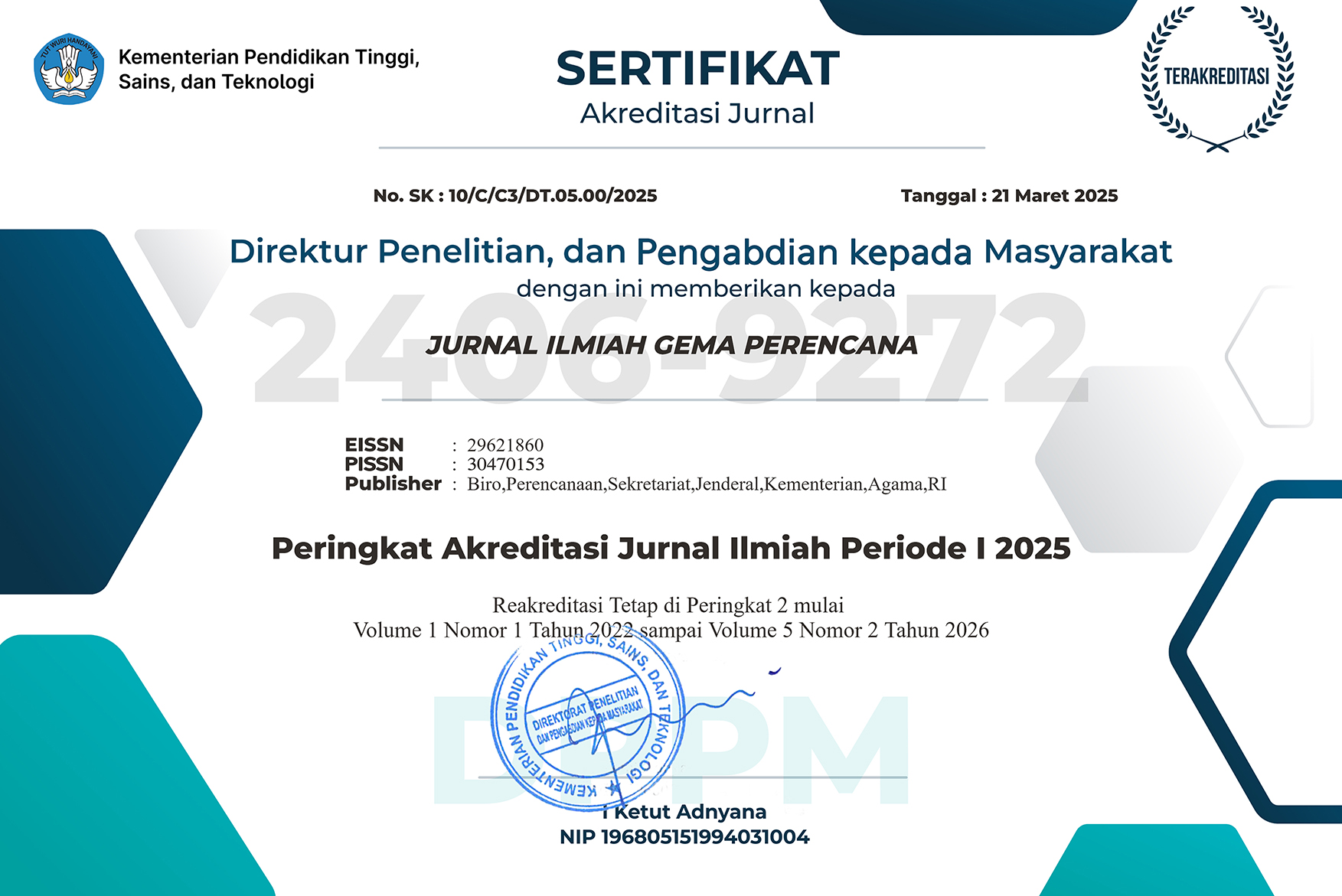
PUBLISHED BY: POKJANAS Collaborate BIRO PERENCANAAN KEMENAG RI
Licensed By: Attribution 4.0 International License

