Vol. 4 No. 2 (2025): Jurnal Ilmiah Gema Perencana

					View Vol. 4 No. 2 (2025): Jurnal Ilmiah Gema Perencana

In Volume 4, Number 2, September-December 2025, the JURNAL ILMIAH GEMA PERENCANA will publish thirty-seven (37) articles. Twenty-six (26) of these articles come from planners within the Ministry of Religious Affairs of the Republic of Indonesia and have passed the Minimum Work Results (HKM) as one of the assessment requirements for participating in the Competency Test (Ujikom) held by the Center for Development, Education, and Training of Planners (Pusbindiklatren) of the National Development Planning Agency (Bappenas RI). Eleven articles are the results of research conducted by various universities in Indonesia.

These thirty-seven articles are presented according to the scope and focus determined by the JURNAL ILMIAH GEMA PERENCANA Editorial Team. The articles published in this journal emphasize the study of "Planning Policy" and "Research Papers" in the fields of Social, Economic, Spatial Planning, and Education from a single perspective.

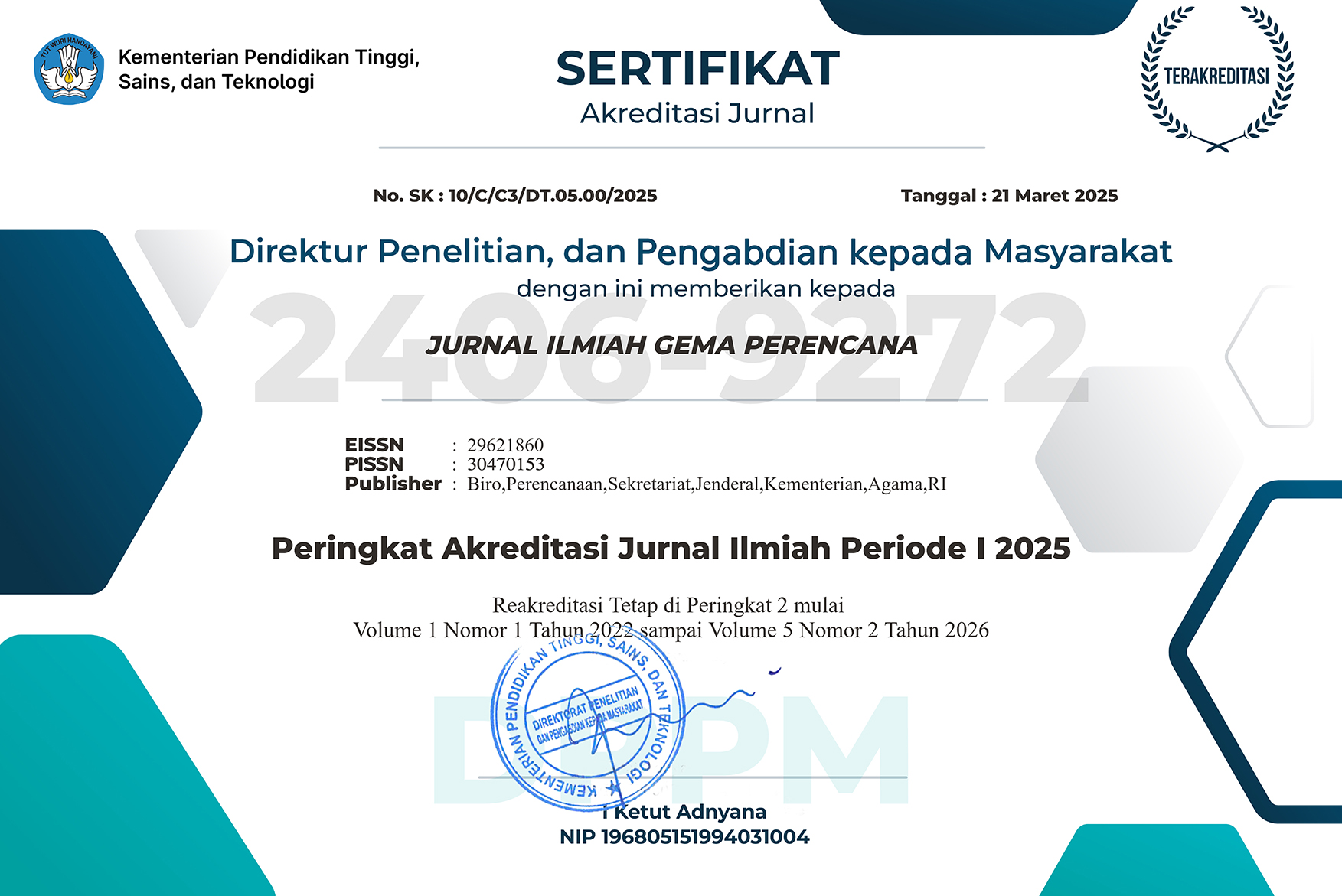
Based on the Minutes of Determination of Scientific Journal Accreditation Results for Period I of 2025, the Decree of the Director General of Higher Education, Research, and Technology Number 10/C/C3/DT.05.00/2025 dated March 21, 2025, concerning the Accreditation Ranking of Scientific Journals for Period I of 2025 has been issued, which stipulates that the SINTA 2 (S2) JURNAL ILMIAH GEMA PERENCANA has achieved the predicate.

Published: 09/01/2025

Article

  • Inconsistency Regulation Presidential Candidates' Campaign Leave: Analysis Post Amendment 1945 Constitution And Saddu Dzariah

    Afrinal ID , Supardi ID , Faisal Efendi ID , Ikhwanuddin Abdul Majid MY , Nimuhammadfatin Samae TH
    https://doi.org/10.61860/jigp.v4i2.231
    Abstract:

    Indonesian constitutional practices, the office of president has undergone many major changes since the amendment of the 1945 Constitution. Some of these changes include the direct election of the president and vice president by the people and restrictions on the president's term of office. It is very beneficial that the president is elected directly by the people. This also shows that Indonesia uses a presidential and republican system of government. The focus of this study is the regulation of presidential candidates' leave from work from a legal and Saddu Dzariah perspective. This study uses qualitative methods uses library research by using the normative juridical method. The literature studied in the Law, Government Regulations, books, journals. The method used is normative juridical The main data was obtained through regulations related to this article. The Presidential elections of the reform era have undergone three significant changes, differing rules regarding the candidates' leave. including the obligation to take leave on holidays and not take leave on holidays. The difference in the Presidential elections of 2004 and 2009 was that the incumbent candidates took campaign leave, including holidays, whereas in the 2019 election, there was none. The similarity among the incumbent candidates: all three did not limit the campaign leave time for the candidates. When viewed from the perspective of Saddu Dzariah ensures that justice is applied correctly, avoiding damage. there are also concerns about influencing the state institutions below it, pressuring someone to vote for the incumbent President, disadvantaging other Presidential candidates.

  • Determinants of Governance: A Systematic Literature Review and Synthesis for Future Research

    Muslikun Mashadi ID , Theresia Trisanti ID , Wisnu Prajogo ID
    https://doi.org/10.61860/jigp.v4i2.225
    Abstract:

    Effective governance is crucial for accountability, transparency, and efficiency within the public sector. Originating from corporate governance principles like accountability and transparency, it expanded to the public sector, exemplified by frameworks such as the UNDP's good governance initiative. Its implementation faces diverse challenges globally, including corruption in emerging nations and bureaucratic efficiency in affluent ones, highlighting the need for a comprehensive analysis of its determinants. This study aims to uncover the determinants influencing governance and their effects on public accountability, operational efficiency, and social welfare. This research employs a Systematic Literature Review (SLR) methodology following PRISMA principles. A Scopus database search using keywords "Governance" and "Ministry OR Central Government OR Department OR Federal" initially yielded 281 articles, subsequently refined to 83 relevant articles. Bibliometric analysis using VOS viewer identified "Governance" as a central theme, closely linked to "government" and "ministry," and indicated a rising research interest from 2010 to 2024. The synthesis of findings reveals that key determinants of governance include stakeholder engagement, robust leadership, policy quality, public participation, and fiscal resources. These factors significantly enhance accountability and transparency, improve policy quality and service efficiency, mitigate corruption, and contribute to economic efficiency and an improved quality of life. Future governance research should focus on multilateral coordination, technology application (e-government, big data), adaptive leadership, decentralization, and sustainable natural resource management to address global challenges.

  • Indonesian Hajj and Umrah Management: Policy Problems and Governance Improvement

    Abstract:

    This policy paper outlines that the implementation of hajj and umrah pilgrimage in Indonesia faces various complex challenges that require comprehensive policy transformation and governance reform. This policy article analyzes the main problems in Indonesian hajj and umrah management, including long queues of hajj candidates reaching 20-30 years, imbalanced quota distribution among provinces, weak PPIU supervision, and low quality of manasik guidance. This paper uses qualitative writing methods with comprehensive document analysis and literature study approaches. The analysis uses the Urgency, Seriousness, Growth (USG) approach developed by Bryson (2018) to determine problem priorities, with William N. Dunn's policy alternative evaluation method based on effectiveness, efficiency, feasibility, sustainability, and political feasibility criteria. The theoretical foundation integrates Public Service Management Theory, Queue Management Theory, Good Governance, and Service Quality Model. Five policy alternatives are analyzed, with the Integrated National Hajj Management System (SIMHAJI) obtaining the highest score (22). The results show that SIMHAJI is the optimal solution because it can address root problems systemically, increase operational efficiency by up to 31%, and strengthen transparency and accountability in hajj-umrah implementation. The main conclusion mentions the need for comprehensive digital transformation through implementing integrated platforms supported by Presidential Regulation on hajj-umrah digital transformation. The main contribution of this article lies in a holistic approach that integrates technology, diplomacy, and governance aspects in policy solutions towards Golden Indonesia 2045.

  • Vocational Madrasahs (MA Kejuruan) still Have Limited Collaboration with the Business and Industrial World

    Muhammad Affandi ID
    https://doi.org/10.61860/jigp.v4i2.252
    Abstract:

    This policy paper elaborates that Madrasah Aliyah Kejuruan (MAK), as an integral part of Indonesia's vocational education system, faces significant challenges due to limited collaboration with the Business and Industry Sector. The lack of effective partnerships between MAK and industry results in a mismatch between the curriculum taught and the needs of the job market, which in turn affects the employability of MAK graduates in the industrial sector. The main causes of this issue include insufficient integrated planning, the absence of a dedicated team to manage relationships with industry, and limited human resource capacity involved in vocational education. Furthermore, inadequate communication and lack of evaluation mechanisms hinder the establishment of sustainable and effective partnerships. The methodology employed in this paper is literature study and policy analysis with a qualitative approach. Data were collected from various secondary sources including academic documents, government reports, and regulatory frameworks. The analysis was conducted using the USG (Urgency, Seriousness, Growth) framework to prioritize problems, fishbone diagram to identify root causes, and William N. Dunn's policy evaluation criteria to assess alternative solutions. This analytical approach enables systematic identification of problems and formulation of evidence-based policy recommendations. This paper analyzes these issues through theoretical approaches that include partnership management, network-based collaboration models, and resource-based theories. Proposed policy alternatives to enhance collaboration include the formulation of mandatory collaboration regulations between MAK and industry, strengthening partnership capacity through training and incentives, and integrating MAK into the national vocational system.

  • Selametan Sumber Air: Ritual Tradisional dan Kearifan Lokal Muslim di Perbukitan Watu Lumbung, Pasuruan

    M. Najich Syamsuddini ID , Achmad Khudori Soleh ID , Ahmad Barizi ID
    https://doi.org/10.61860/jigp.v4i2.240
    Abstract:

    Tradisi Selametan Sumber Air di perbukitan Watu Lumbung, Pasuruan, Jawa Timur, merupakan bentuk kearifan lokal Muslim dalam pengelolaan sumber daya air yang terus berkembang di tengah modernisasi dan perubahan gaya hidup masyarakat. Secara ideal (das sollen), pengelolaan sumber daya air seharusnya mengintegrasikan nilai-nilai spiritual, ekologis, dan sosial secara harmonis. Namun, dalam kenyataannya (das sein), banyak praktik tradisional yang semakin terkikis oleh kepentingan ekonomi jangka pendek dan menurunnya partisipasi generasi muda, yang dapat mengancam keberlanjutan tradisi tersebut. Penelitian ini penting karena mengkaji praktik budaya yang menyelaraskan dimensi agama dan ekologi, serta menawarkan pendekatan alternatif dalam menghadapi krisis lingkungan dan erosi identitas budaya. Penelitian ini menggunakan pendekatan kualitatif dengan desain studi kasus. Informan terdiri dari tokoh agama, tokoh masyarakat, pengurus (juru kunci), dan pemuda setempat, yang dipilih menggunakan teknik purposive sampling. Data dikumpulkan melalui wawancara mendalam, observasi partisipatif selama ritual, dan dokumentasi. Analisis data dilakukan melalui reduksi data, penyajian naratif, dan penarikan kesimpulan, dengan berpanduan pada teori konstruksi sosial oleh Peter L. Berger dan Thomas Luckmann. Temuan penelitian menunjukkan bahwa tradisi Selametan Sumber Air merupakan suatu sinkretisme antara kepercayaan pra-Islam dan ajaran Islam, yang terintegrasi melalui sosok Mbah Sumpil, seorang tokoh karismatik lokal. Tradisi ini bukan hanya sebagai bentuk penghormatan terhadap alam dan sumber air, tetapi juga memiliki makna spiritual, sosial, dan ekonomi yang mendalam bagi masyarakat. Generasi muda memainkan peran strategis dalam transmisi budaya tradisi ini, baik melalui partisipasi langsung dalam ritual maupun melalui pemanfaatan inovasi media digital.

  • Why is the Decision to Choose Sharia banking Low? Reading Role in Influencing Student Interest

    Yuwan Ferdiana Ilahi AO , Munirul Abidin ID , Eko Suprayitno ID , Ceta Indra Lesmana ID
    https://doi.org/10.61860/jigp.v4i2.233
    Abstract:

    Even though Indonesia is home to the largest number of Muslims worldwide, the number of people who use Islamic banking services is still somewhat lower than that of conventional banks. The purpose of this study is to identify the factors that make student less inclined to choose a syariah bank. This study examines how the environment and perceptions affect confidence and adherence to using a syariah bank by using a quantitative deskriptif method and through SmartPLS analysis. The analysis's findings indicate that the environment has a significant impact on perception, with a koefisien of 0.185 (p < 0,001). Perception also has a positive impact on interest, with a coefficient of 0.417% (p < 0,001). Perception, however, does not indicate a significant impact on decision, with a koefisien of 0.138 (p = 0,074). In addition, interest proven has a significant impact on decision, with a coefficient of 0.709 (p < 0,001). This finding indicates that perception mediates the influence of the environment on interest, The student's final decision is imperceptibly affected by their interest regarding syariah bank products. The results indicate that there are significant effects of the environment on perception, with perceptions influencing the relationship between the environment and interest. However, Perception does not indicate a significant impact on decision, indicating that there is a lack of agreement between interest and nyata. All of this provides a strategic plan to help syariah banks increase their positive credit and turn their interest into a nyata decision.

  • Policy Strategy for the Acceleration of Halal Certification for Micro, Small, and Medium Enterprises (UMKM) in East Kalimantan Province in Welcoming the National Capital City (IKN) Nusantara

    Abstract:

    East Kalimantan Province, as the main buffer for the Nusantara National Capital City (IKN), faces both significant challenges and opportunities in local economic development, especially for Micro, Small, and Medium Enterprises (UMKM). The increase in population and demand in IKN will be dominated by the halal product market, given that the majority of Indonesia's population is Muslim. However, the level of halal certification ownership among UMKM in East Kalimantan remains low. This policy paper aims to analyze the problems in accelerating halal certification and to formulate an effective policy strategy. The background highlights the gap between the large potential of the halal market and the reality of its implementation, which is constrained by various factors. The problem formulation focuses on the ineffectiveness of socialization and education, as well as the limited reach of halal assistants and counselors. The writing methodology uses a qualitative approach with secondary data analysis from various reliable sources and policy analysis. The results of the analysis indicate that the root of the problem lies in human resources (assistants), methods (socialization), regulations (complexity), and the environment (UMKM awareness). Based on USG and Fishbone analysis, the main problems are the lack of reach and effectiveness of assistance. The conclusion of this analysis is that without targeted policy intervention, East Kalimantan's MSMEs will struggle to compete in the IKN market 

  • Church Governance: A Systematic Literature Review

    Wisnu Haryo Pramudya ID , Julianto Agung Saputro ID , Atika Jauharia Hatta ID
    https://doi.org/10.61860/jigp.v4i2.260
    Abstract:

    This study is a qualitative research that aims to systematically examine the scholarly literature on church governance over the past three decades, with a focus on identifying key concepts, practices, challenges, and opportunities in church management from theological, organizational, and cultural perspectives. The primary issue addressed is the absence of a conceptual consensus and clear indicators of ecclesiastical governance success, as well as the lack of studies integrating systematic approaches across traditions and disciplines. This research addresses a gap in the literature by providing a comprehensive and systematic review of the evolution and practices of church governance. Utilizing the Systematic Literature Review (SLR) method based on the Preferred Reporting Items for Systematic Reviews and Meta-Analyses (PRISMA) guidelines and the Scopus database, 20 selected scholarly articles were analyzed thematically and bibliometrically. The analysis reveals that church governance has evolved from hierarchical and centralized models toward more participatory and contextual patterns, influenced by social, political, and theological dynamics. The findings also highlight the importance of integrating Gospel values, transparency, congregational participation, and sensitivity to local contexts in designing governance models that are relevant in the modern era. Nonetheless, normative, structural, and cultural challenges remain significant obstacles to effective and inclusive church management practices.

  • Optimizing Public Services in the Ministry of Religious Affairs: The Strategic Role of Training Needs Analysis (TNA) in Developing Employee Competencies

    Abstract:

    This Policy Paper analyzes the strategic role of training needs analysis (TNA) in optimizing public services within the Ministry of Religious Affairs through employee competency development. The quality of public services is often affected by the gap between employee competencies and job demands and public expectations. Therefore, TNA serves as a systematic method for identifying these gaps, thereby ensuring more targeted, efficient, and effective training programs. This study uses a qualitative method with a descriptive-analytical approach, reviewing various literature, internal documents, and relevant best practices to develop an adaptive TNA conceptual framework within the Ministry of Religious Affairs. The analysis shows that comprehensive TNA implementation, from problem identification and data collection from various sources (management, employees, and service users), to data analysis and the formulation of training recommendations, can significantly increase the relevance and positive impact of human resource development programs. TNA helps shift the approach to training from simply "filling time" to a strategic investment focused on tangible performance improvements. Recommendations generated from TNA enable the Ministry of Religious Affairs to allocate resources more wisely, prioritize crucial competency areas, and design results-oriented training curricula. The effective implementation of TNA is expected to create a culture of continuous learning, improve employee professionalism, and ultimately, realize excellent and equitable public services for the entire community.

  • The Mediating Role of Young Tax Accountants in Coretax Implementation: A Phenomenological Study of Tax Awareness and Compliance among Indonesian Youth

    Ester Claudi Jayapriatna ID , Gatot Soeprianto ID
    https://doi.org/10.61860/jigp.v4i2.303
    Abstract:

    This study examines the experiences of young people interacting with the Coretax system, which is positioned not merely as an administrative instrument but also as a medium for transforming the role of young professionals. They appear not only as implementers of fiscal policy but also as educational agents, drivers of social influence, and architects of trust within their peer communities. Using a qualitative approach based on in-depth interviews, this study found that Coretax is appreciated for its ability to simplify reporting mechanisms, provide real-time data access, and strengthen fiscal transparency. However, technical limitations such as system errors, an interface design that is less user-friendly for beginners, and a tax literacy deficit remain significant obstacles. The results of this study emphasize the strategic position of young accountants as epistemic mediators who bridge regulatory complexity with the educational needs of the digital generation. The implications of these findings indicate that the successful implementation of Coretax rests not only on technical improvements but also on the continuous orchestration of tax literacy, in order to foster inclusive, adaptive, and sustainability-oriented fiscal compliance in the digital era.

  • The Urgency of Educator Certification for Ustadz to Guarantee the Quality of Education in Islamic Boarding Schools

    Ahmad Syofiansyah ID
    https://doi.org/10.61860/jigp.v4i2.294
    Abstract:

    This policy paper analyzes the urgency of teacher certification for ustadz in Islamic boarding schools (pondok pesantren) as a strategic effort to ensure educational quality, improve professionalism, and maintain the continuity of pesantren traditions. This issue is crucial due to the incompatibility between formal certification policies and the unique characteristics of pesantren education, which results in limited access, financial disparities, and philosophical differences. Without an inclusive policy framework, ustadz do not receive professional recognition on par with formal teachers, which threatens the quality and sustainability of pesantren education. This study uses a qualitative method with a policy study approach, supported by literature analysis and document review. Data was collected from various relevant regulations, research reports, and scientific publications on the issues of education and pesantren. The problem analysis was conducted using the USG (Urgency, Seriousness, Growth) theory and was supported by public policy theory, human capital theory, and the concepts of social justice and educational equity. The findings indicate that modifying the existing certification policy and developing a special track for pesantren are the two most viable and effective policy alternatives. The main recommendation is for the Minister of Religious Affairs to immediately issue a ministerial regulation that revises the teacher certification procedure to include a specific cluster for ustadz. This policy must recognize and give weight to sanad (chain of scholarly transmission), mastery of classical Islamic texts (kitab kuning), and teaching experience as key criteria.

  • BOS Fund Supervisory Policy Reform: A Study of Efforts to Increase Transparency and Accountability in Madrasahs

    Abstract:

    This Policy Paper aims to analyze the causes and impacts of the lack of interest in the Treasury Officer position at the Ministry of Religious Affairs (Kemenag) Office in Rokan Hilir Regency, which has resulted in the practice of one individual holding the position of Expenditure Treasurer for several Work Units (Satker). This problem indicates a serious gap in human resource (HR) management and state financial governance at the regional level, which has the potential to create the risk of budget mismanagement and violations of the principles of transparency and accountability. The writing method used is a qualitative case study approach, collecting data through in-depth interviews with relevant parties, as well as a documentary study of financial reports and internal regulations of the Ministry of Religious Affairs of Rokan Hilir. Data analysis was conducted using an interactive model, which includes data reduction, data presentation, and drawing conclusions. Preliminary results indicate that several factors contribute to this phenomenon, such as heavy workloads, lack of adequate financial incentives, career limitations, and a lack of appreciation for the strategic role of treasurers. The implications of this dual position include decreased effectiveness of financial oversight, potential errors in reporting, and an increased risk of abuse of authority. This study is expected to provide concrete policy recommendations to relevant parties, including reforming the incentive system, improving human resource capacity, and re-evaluating the organizational structure to ensure every key position is filled by competent and dedicated individuals.

  • Managing Fines from Corruption Cases to Enhance State Asset Recovery: A Case Study at the Corruption Eradication Commission (KPK)

    Nurul Hudaeini ID , Lela Nurlaela Wati ID , Ramdany ID
    https://doi.org/10.61860/jigp.v4i2.244
    Abstract:

    The management of fines (penalties in the form of money) resulting from corruption cases is a critical issue at Indonesia's Corruption Eradication Commission (KPK), due to a decline in asset recovery achievements from 2017 to 2019, which has hindered the effective recovery of state financial losses. As an independent institution mandated to encounter corruption, KPK is responsible for enforcing court-ordered fines and compensation payments. However, administrative and execution challenges have prevented the KPK from meeting its asset recovery targets, highlighting the need for more effective and efficient fine management strategies. This study employs a qualitative methodology with an exploratory and normative juridical approach. Data were collected through observation and in-depth interviews with KPK policymakers directly involved in asset recovery and document analysis. The findings identify six key strategies to improve fines management: developing an integrated application system, optimizing the authority of execution prosecutors, incorporating fine execution performance into key performance indicators, seizing assets held by third parties, revising standard operating procedures, and strengthening asset blocking mechanisms. Implementing these strategies is expected to enhance KPK’s effectiveness in recovering state assets through improved management of corruption-related fines.

  • Data Disparities and Overlapping PIP Recipients in Madrasahs Threaten Effectiveness and Cause State Losses

    Muhammad Amin ID
    https://doi.org/10.61860/jigp.v4i2.282
    Abstract:

    The problem of low reading interest among elementary school students remains a crucial issue that requires serious attention. This condition is evident from the results of an initial survey, which showed that the majority of students are more interested in gadgets and social media than reading books. The gap between the ideal hope of creating a literate generation and the reality of low reading interest is the basis for the urgency of research. This study aims to test the effectiveness of the Project-Based Learning (PjBL) method in increasing students' reading interest. This study used a quantitative approach with a quasi-experimental design and used a population of all fifth-grade students in an elementary school. The research sample was selected using a purposive sampling technique, consisting of 30 students in the experimental group and 30 students in the control group. Data were collected using a reading interest questionnaire that had been tested for validity and reliability, and analyzed using an independent t-test to compare the average differences between the two groups. The results showed a significant increase in reading interest in the experimental group taught using the PjBL method compared to the control group. This increase was supported by the significantly higher average post-test score of the experimental group. It was concluded that the implementation of project-based learning methods was effective in increasing students' reading interest.

  • Towards an Inclusive Hajj: The Urgency of Procedures for Handling Dementia Pilgrims at the Indonesian Ministry of Religious Affairs

    Abstract:

    The government, through the Ministry of Religious Affairs, continues to strive to improve the quality of Hajj services for all Indonesian pilgrims. However, as the number of elderly pilgrims increases, significant issues have emerged regarding services for pilgrims with dementia. This study analyzed three main issues: the inability of pilgrims with dementia to perform their pilgrimage optimally, the difficulties faced by officials and companions in providing assistance, and systemic weaknesses in Hajj governance. The analysis used the USG (Urgency, Seriousness, Growth) theory to prioritize the issues, indicating that both the direct impact on pilgrims and the systemic weaknesses have very high levels of urgency and seriousness. The main root causes were identified as the lack of clear regulations and policies, the lack of comprehensive data and research, and limited training and resources for officials. To address these issues, three alternative policies were developed: a dedicated integrated policy, capacity building for officials, and partnerships with external parties. Policy evaluation using Dunn scoring analysis indicated that the integrated approach was the most effective, although difficult to implement. Therefore, the proposed policy recommendation is to enact regulations mandating the implementation of a combined strategy. This regulation adopts an integrated policy as a long-term vision, while immediately implementing comprehensive training for officers and establishing strategic partnerships as tactical solutions. The goal is to create an inclusive, fair, and equitable Hajj service, ensuring that every pilgrim can perform their pilgrimage safely and with dignity, in accordance with the principles of Maqasid al-Shari'ah.

  • Policy Analysis of the Ecotheology Program at UIN Sulthan Thaha Saifuddin Jambi: Curriculum Challenges and Synergy

    Risye Martarika ID
    https://doi.org/10.61860/jigp.v4i2.270
    Abstract:

    This policy article is motivated by the unsuccessful implementation of the Ministry of Religious Affairs' ecotheology priority program at UIN Sulthan Thaha Saifuddin Jambi. A gap exists between the program's ideal goal of producing relevant graduates and the reality on the ground, where curriculum implementation has not been effectively integrated with the real needs of the local community and industry, and weak synergy between stakeholders. The methodology of this paper uses a qualitative approach with a descriptive analysis approach, case study and Urgency, Seriousness, Growth (USG) analysis and William N. Dunn's theory. The results of the paper indicate that "Lack of Curriculum Relevance" is the most prioritized problem with a total score of 14. The root of the problem is the limited understanding and awareness of UIN Sulthan Thaha Saifuddin Jambi's internal stakeholders regarding the urgency of curriculum renewal. The most effective policy alternative is "Partnership-Based Curriculum Revision" with a score of 21. The Conclusion and Recommendations of this paper recommend the issuance of a Rector's Circular to issue a Partnership-Based Ecotheology Program Curriculum Revision involving academics, practitioners, industry, and local governments to ensure graduates have competencies relevant to contemporary environmental challenges

  • Islamic Legal Analysis of the Practice of Rice Field Pawn (Gadai Sawah) in Jorong Tabek Pala, Talang Village, Gunung Talang District, Solok Regency

    Angel Sophia Intan ID , Johan Agustian ID , B.R.E. Yunanda ID , M. Rafqi Amin ID , Herianto Hasibuan ID , Deby Ramadani Putri ID , Achyar Riyanda Halim ID
    https://doi.org/10.61860/jigp.v4i2.257
    Abstract:

    In Indonesia, Islamic law contributes significantly to the formation of the national legal system and legislation. However, in Nagari Talang, particularly in Jorong Tabek Pala, the situation shows otherwise. One of the main issues related to Islamic law is the inconsistency between the practice of pawning (gadai) and the provisions of Islamic law. Therefore, the research problems addressed in this study are: (1) How is the practice of rice field pawning conducted in Jorong Tabek Pala, Nagari Talang, Solok Regency? (2) How is the Islamic legal analysis of the implementation of rice field pawning in Jorong Tabek Pala, Nagari Talang, Solok Regency? This research is qualitative and descriptive in nature. The data sources consist of the pawners (rahin) and the recipients (murtahin) of the pawning in Jorong Tabek Pala, Nagari Talang, Gunung Talang District. Data were collected through interviews. Data analysis was conducted using data reduction, data presentation, and data verification. The validity of the data was tested using three techniques: source triangulation, time triangulation, and method triangulation. The findings of this study are: (1) The pawning practice carried out by the community in Jorong Tabek Pala is conducted as follows: the party in need of money offers their rice field to someone who has money and is willing to lend it. After finding someone willing to lend money, they make an agreement, either verbally or in writing. (2) From the perspective of Islamic law, the pawning practice in Jorong Tabek Pala falls under the category of riba (usury).

  • Optimizing the Quality of Islamic Religious Education: Needs Analysis and Effective Supervision Strategies in Nganjuk Regency

    Lutfiatus Zuhroh ID
    https://doi.org/10.61860/jigp.v4i2.274
    Abstract:

    This policy article comprehensively analyzes the problems of Islamic Religious Education (PAI) supervision and formulates effective strategies to improve the quality of education in Nganjuk Regency. The background of the problem indicates a structural imbalance between the number of PAI supervisors and the educational institutions they are supposed to supervise, resulting in low supervisory effectiveness. This imbalance is exacerbated by the delay in the appointment of new supervisors despite their qualifications, as well as the administrative implications for the payment of teacher professional allowances. This article uses a qualitative method with a descriptive analysis approach and USG analysis, as well as William Dunn's theory. Theoretically, this condition contradicts the concept of modern supervision, which emphasizes the role of supervisors as facilitators and instructional leaders. Limited resources and high workloads result in supervision tending to be sporadic and focused on administration rather than substantive development. These findings indicate the need for strategic policy interventions. Therefore, this article recommends three main strategies: 1) simplifying the bureaucratic process for appointing supervisors, 2) optimizing the allocation and workload of existing supervisors, and 3) developing a community-based supervision model. By implementing this strategy, it is hoped that the PAI supervision system in Nganjuk Regency can become more professional, effective, and sustainable, which will ultimately significantly improve the quality of PAI learning

  • Policy Strategies to Align Education with Cultural Preservation Needs

    Abstract:

    This policy article examines the urgency of revitalizing the curriculum of Hindu Religious Higher Education Institutions to optimize contributions to cultural preservation. The main issues identified are the gap between the theology-focused curriculum and practical needs in the field, the lack of incentives for lecturers, and limited inter-institutional collaboration, resulting in PTKH graduates lacking practical competencies and leaving Hindu cultural heritage vulnerable to erosion by modernization. This paper uses qualitative methods with a descriptive analysis approach and USG (Urgency, Seriousness, Growth) analysis, as well as William N. Dunn's theory and cost-benefit model to evaluate various policy alternatives. The analysis results indicate that curriculum revitalization is the most fundamental and efficient solution, as it has low implementation costs but very high long-term benefits, namely producing graduates with dual competencies and strong cultural awareness. The proposed policy recommendation is the issuance of a Rector's Regulation that explicitly integrates material on the preservation of intangible and tangible culture into the curriculum of all study programs. This regulation also needs to be supported by an incentive system that recognizes lecturers' contributions to cultural preservation. Thus, PTKH will be able to strengthen its role as a center of knowledge and the vanguard in preserving Hindu cultural heritage in Indonesia.

  • Policy Strategy: Integrating Modern Curriculum in Pesantren as a Pillar of Islamic Education Transformation in the Era of Society 5.0

    Abstract:

    This policy paper outlines that the transformation of Islamic education in the digital era requires Islamic boarding schools (pesantren) to integrate a modern curriculum without sacrificing traditional Islamic values. This study analyzes the policy strategy for integrating a modern curriculum in Islamic boarding schools as a response to the challenge of ensuring the relevance of graduates to the demands of the times. The study methodology uses a qualitative approach with USG (Urgency, Seriousness, Growth) analysis developed to identify problem priorities, root cause analysis using a fishbone diagram, and evaluation of policy alternatives based on William N. Dunn's criteria. Data were obtained through a study of educational policy documentation, institutional performance reports, and a review of academic literature. The analysis shows that the main problem lies in the absence of operational regulations that guide the integration of a modern curriculum in the Islamic boarding school education system. The study recommends the Minister of Religious Affairs Regulation on the Integration of a Modern Curriculum in Islamic Boarding Schools as the most strategic policy instrument to bridge tradition and modernity in Islamic education towards Indonesia Emas 2045.

  • Optimizing Entrepreneurship and Strategic Partnerships for the Economic Independence of Pesantren in Indonesia

    Mukhammad Taufiqur Rakhman ID
    https://doi.org/10.61860/jigp.v4i2.284
    Abstract:

    This policy paper describes that Islamic boarding schools (pesantren) play a strategic role in shaping the character and morals of Indonesia's young generation. However, despite the government's launch of various policies, such as the Islamic Boarding School Economic Independence Program through the Ministry of Religious Affairs, many Islamic boarding schools still face obstacles in implementing these programs. These obstacles generally relate to managerial capacity, access to capital, and limited business mentoring. Dependence on external funding, such as donations and aid, is a major challenge limiting the sustainability of pesantren operations. To address this issue, the development of productive business units and the enhancement of entrepreneurial capacity among pesantren administrators are necessary. This study analyzes the potential for economic independence through an entrepreneurial approach based on Islamic values and synergy with the local business sector. To improve managerial capacity, entrepreneurial training policies and the strengthening of relevant curricula in pesantren are required. The study's findings indicate that policies strengthening entrepreneurial capacity, developing pesantren cooperatives, and strategic partnerships with local industries are effective policy alternatives to improve pesantren's economic independence. These policies would allow pesantren to reduce dependence on donations and enhance their long-term operational sustainability.

  • Comparative Study on Sectio Caesarean Surgical Wound Infection and Ministry of Health Regulation Implementation

    Friza Novriansyah ID , Kusbaryanto ID
    https://doi.org/10.61860/jigp.v4i2.305
    Abstract:

    The global rise in cesarean section (CS) deliveries has increased the risk of surgical site infections (SSI), a leading cause of maternal morbidity and mortality. To address this issue, Indonesia introduced Ministry of Health Regulation No. 40 of 2022, which sets technical standards for hospital buildings, infrastructure, and medical equipment. This study aimed to assess the impact of implementing the regulation on SSI incidence among CS patients by comparing RSU PKU Muhammadiyah Gubug, which has implemented the regulation, and RS Aisyiyah Kudus, which has not. A cross-sectional mixed-methods study was conducted from January to April 2025 involving 41 CS patients (10 at RSU PKU Muhammadiyah Gubug and 31 at RS Aisyiyah Kudus). Quantitative data were analyzed using descriptive statistics and independent-sample t-tests, while qualitative data were obtained through semi-structured staff interviews. Results showed no SSI cases at RSU PKU Muhammadiyah Gubug, while one case (3.23%) occurred at RS Aisyiyah Kudus, with no statistically significant difference (p = 0.251). Compliance at RSU PKU Muhammadiyah Gubug was supported by staff training and infrastructure upgrades, whereas RS Aisyiyah Kudus faced financial and resource constraints. Although the difference in SSI incidence was not significant, the findings suggest that regulatory adherence positively contributes to infection prevention. Larger multicenter studies are needed to validate these results and strengthen evidence for long-term infection control strategies.

  • Development Strategy of the Spice Route in the West-South Region of Aceh as a Halal Tourism Destination: A SWOT Analysis

    Inayatillah ID , Junaidi ID , Fadhlur Rahman Armi ID
    https://doi.org/10.61860/jigp.v4i2.295
    Abstract:

    The Spice Route should serve as the main driver for developing tourism based on history, culture, and economy in Aceh, particularly in the West-South region. However, this area still faces limitations in infrastructure, a lack of digital promotion, and suboptimal management of its historical and cultural potential. This study aims to formulate strategies for developing the Spice Route in the West-South region of Aceh as a halal tourism destination, focusing on enhancing competitiveness, sustainability, and community empowerment. This article employs a descriptive qualitative approach, collecting data through document studies, non-participant observation, and semi-structured interviews with traditional leaders, policymakers, academics, and communities across five districts in the region. SWOT analysis was used to map the strengths, weaknesses, opportunities, and threats of the area’s development. The study recommends strengthening the branding of the Spice Route, revitalizing historical sites, improving infrastructure, and fostering Penta Helix collaboration to position the area as a center of history-based halal tourism.

  • Strategic Policy: Transformation of the North Sumatra Regional Office of the Ministry of Religious Affairs Towards Ecotheologically Conscious Governance

    Azizah Hanim Nasution ID
    https://doi.org/10.61860/jigp.v4i2.313
    Abstract:

    This policy study aims to analyze the failure of the Ecotheology program implementation in bureaucratic governance (good governance) within the Regional Office of the Ministry of Religious Affairs (Kanwil Kemenag) of North Sumatra Province and recommend appropriate regulatory solutions. The main issue identified is the failure of Kanwil Kemenag to realize environmentally conscious governance due to the low internalization of Ecotheology values ​​​​among the State Civil Apparatus (ASN), exacerbated by weak leadership role models and inconsistent Green Office culture. The writing method used is Qualitative Policy Analysis with a descriptive-prescriptive approach. The descriptive approach is used to identify the root of the problem through Root Cause Analysis and Evidence Synthesis techniques (regulation analysis and internal reports), while the prescriptive approach is used to formulate recommendations. For evaluation of policy alternatives, William N. Dunn's Alternative Policy Criteria Scoring theory is used (Effectiveness, Efficiency, Equity, Acceptability) to ensure the feasibility of solutions. The results of the analysis indicate that the root of the problem lies in cultural pathology and leadership crisis, not in the absence of a program, as evidenced by the highest score on the issue of internalization of values. Based on the Dunn criteria evaluation, the best policy alternative is regulatory intervention at the value level.

  • Implementation of the One Stop Service Model at the Integrated Hajj and Umrah Service Center: A Policy Review and Its Impact on Hajj Pilgrim Satisfaction

    Zainar Inayah ID
    https://doi.org/10.61860/jigp.v4i2.280
    Abstract:

    This policy document discusses efforts to improve "One Stop Service" for Hajj pilgrims at the Integrated Hajj and Umrah Service Centers (PLHUT). The main problem identified is the inconsistent implementation of Standard Operating Procedures (SOPs) across the PLHUTs. This inconsistency stems from several factors, including: (1) low digital literacy among pilgrims, particularly the elderly, which hinders service effectiveness despite the existence of digital systems; (2) limited human resources, budget, modules, time, and manasik guidance facilities; and (3) the complexity of service flows and multi-agency bureaucracy involving many parties (such as the Ministry of Religious Affairs and banks). Furthermore, the absence of regulations requiring banks receiving deposits to occupy PLHUT buildings also hinders the implementation of "One Stop Service." This document uses an Urgency, Seriousness, Growth (USG) analysis and finds that inconsistent SOP implementation is the most fundamental problem that needs to be prioritized. The root of the problem is identified as a hierarchical and non-service-focused organizational design, as well as the complexity of the multi-agency bureaucracy. Based on an analysis of bureaucratic theory, open systems, and collaboration, and supported by laws and regulations, this document offers several policy alternatives. Based on William N. Dunn's criteria analysis, the most recommended alternative is to formulate Technical Guidelines/Instructions for the Implementation of Integrated Digital Services (Single Window Hajj-Umrah). This recommendation aims to create effective, transparent, and responsive services through an integrated digital system, which is expected to address SOP inconsistencies, integrate data across agencies, and improve overall service quality.

  • Optimizing the Implementation of the Minister of Religious Affairs’ Decree (KMA) through Tiered Instructional Planning: Addressing Heterogeneous Entry Levels and Aligning Arabic Proficiency

    Ammar Zainuddin ID , Ubay Harun ID , Endang Munawar ID
    https://doi.org/10.61860/jigp.v4i2.301
    Abstract:

    This paper analyzes official documents from the Ministry of Religious Affairs (KMA No. 183/2019, No. 184/2019, and No. 347/2022) and Arabic language textbooks across levels (MI grade 6, MTs grades 7 & 9, and MA grade 10) to examine the application of the Scope–Sequence–Continuity (SSC) principle in Arabic language learning and to design an Arabic language learning plan that is adaptive to input heterogeneity in Madrasahs. This research uses a qualitative method with a content analysis approach to KMA documents and official textbooks from the Ministry of Religious Affairs. The combination of regulatory sources and teaching materials allows mapping of SSC outcomes, material sequences, and repetition patterns across levels while testing the consistency between policies and classroom practices. Therefore, the analysis of each chapter is mapped in the SSC matrix and validated through source triangulation and theory triangulation to reveal the gap between the ideals of the policy and the reality of implementation. Research findings indicate that the curriculum has been designed with a relatively consistent SSC foundation, but has not fully anticipated the heterogeneity of student input. This article highlights the curriculum gap, interprets the data through content analysis, and proposes the concept of input differentiation as a novel contribution to Arabic language learning planning.

  • Regulatory Challenges and Competitiveness of Blitar UMKM: Acceleration of Halal Certification for Economic Growth

    Abstract:

    This policy article discusses the low level of public awareness and understanding of the importance of halal certification, a crucial policy issue in Indonesia, impacting consumer protection and product competitiveness. This issue stems from a lack of education, procedural complexity, limited outreach, and the misperception that certification is only relevant to Muslim consumers. This policy aims to analyze and recommend policy alternatives that can effectively address these issues. Using William N. Dunn's policy alternative scoring theory, three policies are analyzed: the Integrated and Continuous Assistance Policy, the Collaboration with Communities and Religious Organizations Policy, and the Integrated Halal Certification Service Policy at the KUA Office. The analysis shows that each alternative has advantages and disadvantages. The assistance policy has high effectiveness and adequacy, but moderate efficiency. Conversely, the collaboration and integrated service policy has high efficiency and equity, but limited effectiveness. Overall, the integration of these three policies within a synergistic framework is the most ideal approach. Intensive assistance, broad collaboration, and easy access through the KUA can collectively create a strong, responsive, and equitable halal certification ecosystem. It is hoped that these recommendations can provide input for the government to formulate more comprehensive policies to increase public and business awareness and understanding of the importance of halal certification.

  • Standardization of Internal GIS-Based SOP for Recommending Worship Facilities in Maluku

    Moh. Abduh Daeng Matta ID
    https://doi.org/10.61860/jigp.v4i2.264
    Abstract:

    The Maluku Province, consisting of over 1,300 islands with limited regular ferry services covering only about 40 % of remote villages, experiences a pronounced gap between the community’s ideal need for adequate, accessible, and context‑sensitive worship facilities and the actual provision on the ground. The primary issue stems from the absence of internal spatial metadata guidelines and Public Participation GIS (PPGIS) procedures within the Maluku Regional Office of the Ministry of Religious Affairs, despite existing regulatory frameworks—Joint Regulation of the Minister of Religious Affairs No. 9/2006 & Minister of Home Affairs No. 8/2006, Ministerial Regulation No. 19/2019, and Minister of Home Affairs Regulation No. 86/2017—governing permits, technical building standards, and GIS‑based e‑planning. This study employs mixed methods: quantitative descriptive statistics of secondary data (regulatory documents, e‑planning platform, PPGIS shapefiles, Planning Bureau reports) and USG (Urgency–Seriousness–Growth) scoring, alongside qualitative semi‑structured interviews with ten key informants (regional officials, GIS planners, community affairs, ICT agency, religious leaders). Spatial analysis using buffer and overlay in QGIS, thematic coding per Miles & Huberman, triangulation, and member checking ensure validity. Findings reveal only 60.7 % village coverage, heterogeneous metadata formats, and procedural and technical coordination barriers. It concludes that issuing a Regional Office Decree on an Internal SOP for GIS‑PPGIS (Alternative 1) is the most critical intervention.

  • Law Enforcement Strategies Against the Negara Islam Indonesia (NII) Network in Indonesia

    Elidar Sari ID , Al Chaidar ID , Arif Rahman ID , Muammar ID , Tri Widya Kurniasari ID
    https://doi.org/10.61860/jigp.v4i2.308
    Abstract:

    The persistent and unique threat posed by the Negara Islam Indonesia (NII) network, characterized by its long-term strategy of societal infiltration and the establishment of a parallel state, demands specific and adaptive law enforcement strategies. This article, which adopts a qualitative descriptive-analytical research method, examines the various legal and operational approaches employed by Indonesian law enforcement agencies in countering the NII. The analysis focuses on the application of existing laws, including anti-terrorism legislation and other relevant criminal codes, to address the NII’s distinct activities that often fall outside the conventional understanding of terrorism. The paper also investigates the intelligence-gathering techniques, surveillance methods, and arrest procedures utilized to target NII cells and leadership, considering the challenges posed by the network’s decentralized and clandestine nature. Furthermore, it evaluates the effectiveness and legality of these law enforcement strategies, exploring issues related to due process, human rights, and the potential for overreach. By analyzing specific cases and broader trends, this research aims to provide a critical assessment of the current law enforcement response to the NII in Indonesia, highlighting both successes and areas for improvement in addressing this complex and enduring security challenge.

  • Optimizing the Role of Civil Servants of the Ministry of Religious in Bali as Agents of Environmental Change Through the Implementation of Ecotheological Values in Formal Work Policies and Programs

    Ratna Mufidah ID
    https://doi.org/10.61860/jigp.v4i2.273
    Abstract:

    This policy article discusses the increasingly pressing environmental crisis that demands a holistic approach that integrates spirituality and concrete action. Ecotheology presents itself as a relevant perspective, particularly for the Ministry of Religious Affairs' Civil Servants, who play a strategic role as agents of change. However, this article identifies that the role of Kemenag civil servants in Bali Province in environmental conservation is suboptimal due to the limited implementation of ecotheological values in formal policies and work programs. This gap stems from limited human resource capacity and specific knowledge of environmental issues among civil servants, which hinders the translation of spiritual values into concrete action. This paper uses qualitative methods with descriptive and ultrasound analysis approaches, as well as William Dunn's theory. This article evaluates several policy alternatives to address this issue. The analysis indicates that the most strategic and effective step is to issue formal regulations at the Bali Provincial Ministry of Religious Affairs Regional Office level, such as a Circular Letter. This regulation would provide a strong legal foundation, ensure resource allocation, and provide a clear mandate for all civil servants to integrate ecotheology into their duties and responsibilities. Thus, the discourse on environmental spirituality can be transformed into a structured and impactful work program, making the Ministry of Religion the vanguard in environmental conservation efforts in Bali.

  • Bridging Rules and Needs: A Policy Study on the Establishment of Places of Worship Without Permit in West Papua

    Miftahul Mungin ID
    https://doi.org/10.61860/jigp.v4i2.268
    Abstract:

    This policy article examines the issue of the construction of houses of worship without permits in West Papua Province, which is rooted in a mismatch between government regulations and the real needs of the community. The main problem stems from the inconsistent implementation of Joint Ministerial Regulations (PBM) Numbers 9 and 8 of 2006, which contain articles subject to multiple interpretations and influenced by local political pressure. This situation is exacerbated by unclear oversight and law enforcement mechanisms, as well as the structural weaknesses of the Interfaith Harmony Forum (FKUB), which is often not neutral. As a result, many houses of worship are built without formal permits, triggering social conflict and resulting in demolitions that create trauma within the community (Azra, 2018; Lubis, 2019). To address this problem, three policy alternatives are analyzed: revitalizing the PBM, establishing an independent monitoring team, and reforming the FKUB. This article uses qualitative methods with descriptive and ultrasound analysis approaches, as well as William N. Dunn's theory. The establishment of an independent monitoring team is considered the most effective and responsive alternative (score 22). This team will have the authority to monitor, mediate, and recommend sanctions, thus bridging the gap between regulations and community needs fairly (Prasetyo, 2021). Therefore, the proposed policy recommendation is the establishment of an independent monitoring team under the Regional Office of the Ministry of Religious Affairs of West Papua Province as a strategic solution to ensure a transparent and accountable licensing process, for the sake of sustainable harmony.

  • The Effect of Mobile Trust and Mobile Satisfaction on Electronic Word of Mouth and Intention to Use E-Wallets in West Java Province

    R. Bambang Budhijana ID
    https://doi.org/10.61860/jigp.v4i2.321
    Abstract:

    The rapid growth of digital financial services has transformed consumers’ payment behavior from cash-based transactions to mobile-based systems, making e-wallet adoption increasingly important in Indonesia’s digital economy. This study aims to analyse the influence of Mobile Trust and Mobile Satisfaction on Electronic Word of Mouth (E-WOM) and the Intention to Use e-wallet application.  The method used was quantitative, with data collected through a g-form questionnaire survey involving 100 respondents from Generation Z aged 19 to 23 years in West Java Province. Measurements are made on a Likert scale of 1-6 to eliminate choices that lead to a central tendency.  Processing is carried out with SmartPLS4.0. The results of the processing showed that Mobile Trust could be concluded to have a positive and significant impact on E-WOM, while Mobile Satisfaction did not show a significant effect. On the other hand, Perceived Risk was found to have a positive influence on the Intention to Use e-wallet, while Security significantly affected the E-WOM but did not affect the Intention to Use the e-wallet. This research emphasizes the importance of user trust in influencing decisions to share positive information about digital services. These findings provide insights for e-wallet providers to develop more effective marketing development strategies, with a focus on improving Mobile Trust and service security.

  • Low Awareness of the Academic Community is the Main Challenge to the Implementation of the Green Campus at UIN Maulana Malik Ibrahim Malang

    Achmad Zamroni ID
    https://doi.org/10.61860/jigp.v4i2.272
    Abstract:

    This policy article analyzes the low level of awareness among the academic community at UIN Maulana Malik Ibrahim Malang in supporting the Green Campus, which poses a significant obstacle to the realization of the sustainability vision. This research identifies the main root cause, which stems from the lack of strong leadership commitment to enforcing regulations, which directly leads to the absence of clear sanctions or appreciation and low participation in the integrated waste management program. This paper uses qualitative methods with a descriptive analysis approach and USG analysis as well as William N. Dunn's theory, which results in the finding that regulatory alternatives are the most effective solution to address the root cause directly and quickly. As a recommendation, this article proposes the issuance of a Rector's Regulation that is regulatory and binding, containing obligations, administrative sanctions, and a monitoring mechanism. This policy is expected to serve as a strong foundation for changing behavior, increasing participation, and effectively strengthening UIN Malang's reputation as a leading PTKIN fully committed to sustainability.

  • Shaping Environmental Awareness: Policy Synthesis and Behavioral Shifts for A Sustainable Campus at Universitas Islam Negeri Raden Intan Lampung

    Ika Wulan Handayani ID
    https://doi.org/10.61860/jigp.v4i2.255
    Abstract:

    This study analyzes the low awareness and participation of UIN Raden Intan Lampung's academic community in sustainable green campus implementation, despite the institution's strong commitment and impressive UI GreenMetric achievements. This phenomenon is paradoxical, marked by increased energy consumption and vehicle ratios, indicating a gap between infrastructure provision and expected behavioral change. The research objective is to analyze the fundamental factors contributing to low participation and formulate strategic policy alternatives that can be implemented. The research method employs a descriptive qualitative approach with extensive document review. The identification of the main problem was conducted through Urgency, Seriousness, Growth (USG) analysis, followed by root cause analysis using a Fishbone Diagram. The frameworks of Theory of Planned Behavior, Diffusion of Innovation, and Policy Implementation Theory, supported by the concept of Ecotheology, serve as a comprehensive analytical foundation. Research results indicate that 'Low Level of Awareness and Active Participation of the Academic Community' is the top priority issue (USG score 14), rooted in a lack of knowledge, suboptimal education programs, unclear participation mechanisms, and incomplete integration of environmental issues within policies and curriculum. These findings affirm systemic weaknesses rather than mere individual failures. In conclusion, this study recommends 'Comprehensive Integration of Environmental Education in Curriculum and Extracurricular Activities' as the most optimal policy alternative (score 19). The issuance of a binding Rector's Regulation to comprehensively integrate Ecotheology-based environmental education is crucial. This is expected to transform campus culture, produce environmentally conscious graduates, and position UIN as a model Islamic institution in sustainability.

  • Habituation and Internalization of Islamic Education Values in Character Building: A Phenomenological Study at Madrasah Ibtidaiyah Nasy’atul Muta’allimin Candi Sumenep

    Ach. Syaiful ID , Amiruddin ID , Hafid MY , Faizatul Fitriyah ID
    https://doi.org/10.61860/jigp.v4i2.324
    Abstract:

    Madrasah as an Islamic educational institution faces challenges in implementing Islamic values for student character building. Although religious activities have been carried out routinely, they have not effectively touched the core of students’ spirituality as reflected in their daily behavior. The gap between the ideality of madrasah as a producer of noble character and the reality of value shifts highlights the urgency of structured and sustainable Islamic value implementation studies. This study employs a qualitative approach with ethnographic-phenomenological methods at Madrasah Ibtidaiyah Nasy’atul Muta’allimin Candi, Sumenep, Madura. Research subjects include the madrasah principal, vice principals, teachers, school committees, parents/guardians, and surrounding community. Data were collected through in-depth interviews, participatory observation, and documentation, then analyzed through data reduction, data presentation, conclusion drawing, and verification stages. Data validity was ensured through credibility, transferability, dependability, and confirmability. The findings reveal that Islamic values implementation is based on three main foundations: faith, sharia, and ihsan, manifested through habituation of greeting-smiling-salutation values, honesty, trustworthiness, and responsibility. Implementation strategies include teacher exemplary behavior, madrasah culture, project-based learning, and cross-curricular integration, reinforced with specific practices such as teachers welcoming students, reciting Asmaul Husna, congregational dhuha prayer, and intensive parental cooperation. This study concludes that Islamic character building requires continuous habituation through real behavioral examples from teachers and parents. Recommendations are directed to madrasah education practitioners to develop structured, organized, and dynamic value implementation concepts according to each institution’s factual context, and to future researchers to explore the long-term impacts of habituation strategies on madrasah students’ character.

  • From Administrative Obligations to Data-Driven Policymaking: Strengthening the Role of Evaluation in the Direktorat Jenderal Bimbingan Masyarakat Kristen

    Deivy Donna Ingrid Supit ID
    https://doi.org/10.61860/jigp.v4i2.271
    Abstract:

    This policy article aims to analyze fundamental problems in integrating evaluation results into the planning, decision-making, and budgeting processes at the Directorate General of Christian Community Guidance. The main problems identified are the lack of binding internal regulations, exacerbated by an evaluation paradigm that is still oriented towards administrative fulfillment, as well as inadequate systems and human resource capacity. This condition causes evaluations to not function as a strategic pillar, but rather cease to function as archival reports. This paper uses qualitative methods with a descriptive analysis approach, USG (Urgency, Seriousness, Growth) analysis, and William N. Dunn's theory to identify the root of the problem and formulate solutions. Based on this analysis, several complementary policy alternatives are proposed, including the issuance of a Circular Letter requiring the use of evaluation results as a prerequisite for planning, the establishment of comprehensive Evaluation Implementation Standard Guidelines, and the development of Data Governance Guidelines and the utilization of technology. This policy is expected to encourage bureaucratic transformation, increase accountability, and ensure that every program and budget at the Directorate General of Christian Community Guidance is based on in-depth analysis, so that it can respond to the needs of the congregation more effectively and adaptively.

  • Strategy for Developing Superior State Christian Religious Schools: Addressing the Religious Education Gap in Indonesia

    Melda Ery Rusmawi ID
    https://doi.org/10.61860/jigp.v4i2.275
    Abstract:

    This policy article discusses the urgency of developing a strategy for superior state Christian religious schools as a fundamental solution to address the gap in religious education in Indonesia. Although religious education is guaranteed by the constitution, the reality shows significant disparities, where Christian religious education is still dominated by private institutions with limited funding, facilities, and quality of teaching staff, which stands in stark contrast to state support for similar institutions from other religions. This gap impacts the low competitiveness of graduates, hinders vertical mobility, and has the potential to threaten social harmony. This paper uses qualitative methods with descriptive analysis approaches and USG analysis as well as the theory of William N. Dunn. Starting from these problems, this article identifies several root causes, including unfair resource allocation, the absence of a superior reference model, and the lack of a regulatory framework and integration of a modern curriculum. To address these challenges, this article proposes a comprehensive strategy that includes the development of a holistic curriculum model, guaranteed funding from the state budget, strategic location determination, strengthening supporting regulations, and multi-stakeholder collaboration. With this strategic approach, the development of superior schools will not only improve access to and the quality of Christian religious education, but will also become an instrument for realizing social justice, improving the quality of human resources, and strengthening the foundations of nationality within the framework of Bhinneka Tunggal Ika.

  • Digital Transformation of Educational Supervision: A Strategy to Address the Imbalance in Madrasah Supervisor Ratios in Jambi Province

    Abstract:

    This policy article is motivated by a serious challenge in madrasah (Islamic school) supervision in Jambi Province: the extreme disparity in the supervisor-to-madrasah (Islamic school) ratio, which leads to ineffective supervision and widens the quality gap between regions. Data shows a sharp disparity, from the ideal ratio of 1:4.4 in Jambi City to an excessive workload of 1:25.5 in West Tanjung Jabung Regency, which reduces supervision to an administrative formality and compromises its pedagogical development function. Through USG analysis, the issue of "the absence of an integrated digital supervision system" was identified as a top priority due to its potential as a multiplier effect. This article uses the frameworks of Gap Theory, Systems Theory, and Agency Theory to dissect the root cause of the problem and review the concepts of e-supervision, decentralized supervision, and data-driven Continuing Professional Development (PPB). As a strategic solution, a policy is proposed to develop and implement an integrated digital-based supervision system (e-Supervision). This platform is designed to streamline processes, reduce administrative burdens, and provide real-time data for accountable decision-making. The implementation of e-supervision is expected to not only address geographic and resource constraints but also transform the role of supervisors into strategic facilitators. This policy also serves as a foundation for empowering madrasah principals as internal supervisors and fostering a culture of collaboration through the Professional Learning Community (PLC), creating a fair, accountable, and data-driven supervisory ecosystem for equitable improvement of madrasah education quality across Jambi Province.

  • The Crisis of Buddhist Religious Education in Bali: A Policy Analysis of the Limited Number of Buddhist Teachers

    Abstract:

    This policy article examines the crisis in Buddhist religious education in Bali, a multidimensional issue rooted in teacher shortages and inefficient government policies. This study deeply analyzes the factors causing this crisis and formulates relevant policy alternatives. Root cause analysis, using a fishbone approach, indicates that the main problem lies in the limited number of teacher formations and appointments triggered by disproportionate formation policy regulations, as well as the slow policy response to the dynamics of teacher needs in the region. Based on the USG (Urgency, Seriousness, Growth) analysis, this problem has the highest priority level, demanding immediate and sustainable solutions. Therefore, a combination of strategic policies is recommended, including: (1) prioritizing the appointment of honorary teachers to PPPK; (2) implementing a rotation system with special incentives; (3) reforming formation allocation based on real needs data; and (4) simplifying the recruitment process through digitalization, and launching a campaign to increase the attractiveness of the teaching profession. The implementation of these recommendations is expected to overcome the crisis, guarantee the right to equal religious education for every Buddhist student, and strengthen the spiritual foundations within Balinese society.

  • Optimizing Pakpak Bharat Regency's Waqf Assets: Policy to Increase Public Awareness and Establish a Professional Management Institution

    Linda Fitri ID
    https://doi.org/10.61860/jigp.v4i2.281
    Abstract:

    This Policy Paper outlines that waqf management in Pakpak Bharat Regency faces significant challenges due to the absence of a professional district-level waqf management institution, poor coordination among stakeholders, and the incomplete legalization and documentation of waqf assets. This condition results in the suboptimal utilization of waqf land, which has significant potential to support community welfare. This article uses a qualitative method with a descriptive analysis approach. Alternative policy analysis uses the William N. Dunn scoring method. The most recommended policy is the establishment of a District-Level Waqf Management Institution through the issuance of a Minister of Religious Affairs Regulation governing its formation, structure, and work procedures, as well as its integration with the Indonesian Waqf Board (BWI). This policy was chosen because it is considered the most effective in strengthening coordination, guidance, and supervision of sustainable waqf asset management, accelerating waqf land certification, and ensuring integrated waqf asset documentation. The implementation of this institution is also expected to increase the capacity of Nazhir through training and certification, so that waqf management becomes more professional and productive. This regulatory support will strengthen the legitimacy and sustainability of waqf management, reduce the potential for disputes, and expand the distribution of waqf benefits to the community. With the existence of an official institution at the district level, the Ministry of Religion can ensure more structured, transparent, and accountable waqf management, while simultaneously making waqf a strategic instrument for regional socio-economic development.

  • Eco-Theology Implementation Policy Strategy at the Toraja State Christian Institute (IAKN)

    Yulianti Duma ID
    https://doi.org/10.61860/jigp.v4i2.283
    Abstract:

    This policy examines the fundamental problems in the implementation of eco-theology at the State Christian Institute (IAKN) Toraja, namely the absence of a formal policy framework at the institutional level and the absence of integrated implementation guidelines. This condition causes efforts related to eco-theology to be partial, unstructured, and unmeasurable, thus limiting the institution's contribution to environmental conservation issues. Based on a policy analysis using William N. Dunn's scoring theory, it was found that "Issuing a Rector's Regulation on the Integration of Eco-Theology in the Tri Dharma" is the most strategic and effective policy alternative. This policy is considered highly effective because it directly addresses the root of the problem by providing an official mandate and a binding legal basis for all work units, transforming eco-theology into an institutional priority, rather than merely an individual initiative. Therefore, it is recommended that IAKN Toraja prioritize the issuance of this rector's regulation as the main foundation. This policy will serve as a strong umbrella for subsequent steps, such as the development of integrated implementation guidelines and the development of a monitoring and evaluation system based on Key Performance Indicators (KPIs). With this approach, IAKN Toraja can ensure that the implementation of eco-theology is systematic, measurable, and accountable, so that it is able to fulfill its theological and social responsibilities in preserving the environment.

  • Implementation of Islamic Religious Education through Digital Interactive Media in Forming a Civil Society in the PGSD A1 Class at UNP Kediri

    Nasrul Syarif ID , Sulistiyani ID , Aang Kunaifi ID
    https://doi.org/10.61860/jigp.v4i2.320
    Abstract:

    This article presents that Islamic education holds an essential position in building an ethical, just, and broad-minded society. However, the implementation of Islamic education faces various challenges, such as the impact of globalization, the dichotomy between religious and scientific knowledge, the lack of character education, and limited support from multiple stakeholders. This study aims to analyze the role of Islamic education in shaping a civil society using a quantitative approach. The results indicate that digital interactive media—such as videos, educational applications, and learning games—have a positive impact on students’ understanding and motivation in studying Islamic Religious Education (PAI). Based on the collected data, 85% of students find it easier to understand the material through PowerPoint and interactive videos, 77% feel that learning applications help them study more flexibly, and 90% are more motivated through educational games. With strong support from various parties, the implementation of interactive media can serve as an effective solution to improve the quality of Islamic Religious Education (PAI) learning and to foster a generation of noble character.

  • Weaving the Future of Pesantren: Policy Reform for Integration and Unified Education Data

    Agustina Purnairawati ID
    https://doi.org/10.61860/jigp.v4i2.288
    Abstract:

    This policy paper describes that integration of traditional Islamic boarding schools (pesantren khalafiyah) with formal education (madrasah) in Indonesia faces significant structural and administrative challenges. The urgency of this issue stems from the ambiguity of legal status, an excessive administrative burden, and fragmented educational data. These problems impede operational effectiveness, threaten the quality of education, and undermine public trust in these hybrid institutions. This situation also complicates access to government funding and legal recognition for graduates. This policy paper utilizes a problem analysis approach supported by USG (Urgency, Seriousness, Growth) analysis and a fishbone diagram to identify the root causes of the issues. The analysis confirms that the lack of clear legal status is the most critical issue, which in turn gives rise to other problems such as threats to educational quality and data fragmentation. The research findings indicate that a key problem is the existence of dual regulations and a lack of policy harmonization between different directorates within the Ministry of Religious Affairs. This regulatory duality results in separate reporting systems and redundant administrative procedures for integrated institutions. The results of this analysis highlight four main issues: unclear institutional status, a direct threat to education quality, fragmented educational data, and cumbersome administration. Resolving these issues is crucial for empowering pesantren khalafiyah and strengthening the foundation of national education, in line with the government's vision to develop competitive human resources.

  • Reforming Halal Product Assurance Governance in West Nusa Tenggara: A Strategy to Streamline Complex Procedures and Integrate Institutions

    Abstract:

    This policy article analyzes the challenges of implementing Halal Product Assurance (HPA) in West Nusa Tenggara (WNT), which is striving to position itself as a leading halal tourism destination. Despite a clear strategic vision and central government regulations, the halal certification process for Micro, Small, and Medium-sized Enterprises (MSMEs) still faces significant obstacles, particularly complex and time-consuming procedures. The main issues stem from the dual authority between the Halal Product Assurance Organizing Agency (BPJPH) and the Indonesian Ulema Council (MUI), a lack of integrated information systems among institutions, and inefficient audit procedures due to limited resources at the regional level. This situation not only burdens MSME actors and hinders the competitiveness of local products but also has the potential to damage the credibility of WNT's overall halal vision. Therefore, this article identifies the root causes of these problems and proposes strategic policy recommendations to reform HPA governance, streamline procedures, and integrate the roles of all stakeholders to create a more efficient, transparent, and competitive halal certification ecosystem.

  • Myasthenia Crisis Management in the ICU: A Case Report

    Dhita Natasha Dwiriyanti ID , Novita Anggraeni ID
    https://doi.org/10.61860/jigp.v4i2.316
    Abstract:

    This study focuses on analyzing the clinical course of myasthenic crisis in post-thymomectomy patients by examining the triggering factors, physiological responses, and the effectiveness of multidisciplinary interventions in stabilization and recovery. The research method used was an in-depth clinical case study that monitored the patient's condition from the acute phase to the weaning phase through direct observation, medical data analysis, and tracking of the therapeutic interventions provided. The results showed that myasthenic crisis was influenced by a combination of nosocomial infection, severe neuromuscular weakness, electrolyte disturbances, and acute respiratory failure. Each intervention from emergency intubation, aggressive antibiotic therapy, hypokalemia correction, IVIG administration, to respiratory physiotherap contributed directly to the improvement of respiratory function and hemodynamic stability. This study provides important implications that myasthenic crisis is a systemic condition that requires rapid decision-making, a structured therapeutic approach, multi-layered monitoring, and cross-professional integration. In addition to strengthening the global literature, these findings emphasize the value of early identification of triggering factors and metabolic correction as key to accelerating recovery, while also opening up space for further research with larger sample sizes to develop more comprehensive clinical guidelines.

  • Mitigation Strategy for Organizing the Hajj and Umrah Worship

    Hanif Mu'azizah ID
    https://doi.org/10.61860/jigp.v4i2.291
    Abstract:

    This policy paper describes that the long waiting time for the Hajj pilgrimage triggers people to choose to carry out the Umrah pilgrimage first through the Umrah Travel Organizer (PPIU) travel agency. The great interest of the Muslim community has caused the number of travel agencies to increase, thus causing competition in terms of financing and providing complete facilities to prospective pilgrims as part of the promotions offered. This creates a wide gap for rogue travel agents to commit fraud, so that quite a few people are trapped and suffer losses. Based on ultrasound analysis and tree diagrams, it was found that the current high public interest in the Hajj and Umrah pilgrimage is due to attractive travel agency offers, where the travel agency offers competitive prices, causing many prospective Hajj and Umrah pilgrims to become victims of fraudulent travel agency fraud in Indonesia. The policy recommendation that can be given is to issue a policy limiting regular Hajj registration for first-time pilgrims (First-Time Hajj Registration Policy) which is implemented with a one-time registration system in the national database of Hajj pilgrims as well as integrating Hajj data with Dukcapil, Immigration and SIPATUH to verify departure history.

  • Receiving Proceeds from Sexual Transactions for Prostitutes in the Perspective of Hadith and Economic Aḥkâm

    Haddad Ulum Harahap ID
    https://doi.org/10.61860/jigp.v4i2.325
    Abstract:

    This study discusses the prohibition of receiving proceeds from sexual transactions in prostitution practices based on the perspective of the economic aḥkām hadith. Prostitution, as a form of sexual deviation and adultery, is not only seen as damaging to moral and social order, but also contrary to the principles of sharia economics which emphasize the permissibility and blessing of income sources. The focus of the study is to analyze authentic hadiths, especially those narrated by al-Bukhārī, Muslim, al-Bayhaqī, and Ibn Mājah, which explicitly prohibit mahr al-baghī (prostitutes' wages) as a form of illicit wealth. Using a qualitative method based on literature studies through the analysis of sanad, matan, and istinbāṭ law, this study finds that all forms of receiving wealth from prostitution activities are illegitimate according to sharia because they contradict the maqāṣid al-shari'ah, especially the protection of honor and offspring. The findings of this study confirm that income from prostitution cannot be considered halal (lawful) assets, cannot be used as an object of transaction, and has no economic blessings. Furthermore, the study identifies several challenges in the implementation of Islamic law regarding prostitution, such as weak legal socialization, lack of public understanding, and minimal social and economic policy intervention. This research contributes to strengthening the study of Islamic economics and provides a normative foundation for developing policies to combat prostitution based on Islamic values.

  • Transforming the Religious Education Program to Address the Roots of Violence against Children and Women

    Sahdani Ritonga ID
    https://doi.org/10.61860/jigp.v4i2.299
    Abstract:

    This Policy Paper outlines the Cascading Program for Religious Instructors related to the eradication of violence against children and women. The lack of integrated training curriculum support, the absence of specific measurable performance indicators, and the lack of strong cross-sector coordination with child and women's protection agencies, so that this program is unable to reach the root of the social and cultural problems that cause violence. The objectives of this policy paper focus on 1) creating an integrated training curriculum synchronizing programs in terms of efforts to eradicate violence against children and women, and 2) establishing and creating specific measurable performance indicators 3) implementing strong cross-sector coordination with child and women's protection agencies. There are 3 (three) recommended policy alternatives, namely Alternative policies in the field of regulations, Alternative policies in the field of institutions and structures, alternative policies in the field of programs and implementation. Through the analysis of these policy alternatives, it can be concluded that program achievements at the Ministry of Religious Affairs can be realized if there is program synchronization and cascading performance in functional positions of religious instructors. Thus, the increasingly better performance of counselors will be able to resolve the problem of violence against women and children in the form of increasing the quality of family guidance services as well as fulfilling the activity performance indicator "number of families who receive guidance and services for Sakinah/Kristiani Bahagia/sukinah/hitta sukhaya heritage".

  • The Awqaf-Driven Venture Capital: A Policy Innovation in Financing for the Pesantren Entrepreneurial Ecosystem

    Anas Alhifni ID , Martin Roestamy ID , Warizal ID , Biyati Ahwarumi ID , Asep Thobibudin Qolyubi ID
    https://doi.org/10.61860/jigp.v4i2.322
    Abstract:

    This study proposes an innovative financing model that integrates waqf (awqaf) instruments with venture capital principles in response to the funding gap within the pesantren entrepreneurial ecosystem. The background of the problem indicates that although pesantren have significant economic potential, access to capital that is both Shariah-compliant and growth-oriented remains limited. The methodology employed is a qualitative multi-method approach, which includes an analysis of contemporary Islamic finance literature, case studies of productive waqf models, and the development of a conceptual framework through systematic modeling. The results and discussion demonstrate that the proposed Awqaf-Driven Venture Capital (Awqaf-VC) model has the potential to overcome traditional financing limitations by combining the perpetual nature of waqf with the strategic approach of venture capital. This framework is supported by a juridical analysis of Law No. 41 of 2004 concerning Waqf and the Financial Services Authority Regulation (POJK) No. 25 of 2023 concerning the Operation of Venture Capital Companies and Sharia Venture Capital Companies, which legally facilitates such a structure. The conclusion of this study is that the Awqaf-VC model can serve as a sustainable financing alternative that not only enhances the economic scalability of pesantren but also strengthens Shariah compliance in the digital age. The policy recommendation put forward is the development of derivative regulations that specifically govern the mechanisms for governance, risk mitigation, and fiscal incentives for nazhirs and managers of waqf-based Sharia venture capital funds.

  • Policy Formulation: The Influence of Discipline and Work Environment on Performance with Job Satisfaction

    Samsuri ID , Martin Roestamy ID , Warizal ID , Radif Khotamir Rusli ID
    https://doi.org/10.61860/jigp.v4i2.328
    Abstract:

    This research provides a policy-focused analysis of how organizational discipline and work environment policies influence employee performance through job satisfaction, grounded in the Indonesian legal framework. Using path analysis on data from 94 employees at PT. Catur Dakwah Crane Farmasi Bogor, this study evaluates the on-the-ground implementation of national labor regulations, specifically Law Number 13 of 2003 concerning Manpower. This rigorous methodological approach—utilizing probability sampling, validated psychometric instruments, and path analysis via SPSS—was strategically employed to empirically deconstruct and verify the posited theoretical framework, thereby ensuring the findings' robustness for informing evidence-based policy. The empirical findings reveal a dual-pathway mechanism to performance: an affective pathway mediated by job satisfaction (particularly for work environment policies) and a procedural pathway operating directly through discipline. Results demonstrate that: 1) work discipline and work environment have direct positive and significant effects on job satisfaction (R² = 0.512); 2) work discipline, work environment, and job satisfaction all have direct positive and significant effects on employee performance (R² = 0.635); 3) job satisfaction does not mediate the discipline-performance relationship, indicating a strong situation effect; and 4) job satisfaction significantly mediates the environment-performance relationship. These findings provide evidence-based recommendations for both national labor policy formulation and organizational-level policy implementation in the Indonesian pharmaceutical sector.

  • Distributive Justice and Ethical Challenges in Digitizing Pesantren Land Certificates

    Biyati Ahwarumi ID , Anas Alhifni ID , Martin Roestamy ID , Radif Khotamir Rusli ID
    https://doi.org/10.61860/jigp.v4i2.329
    Abstract:

    Indonesia's national land certificate digitization, while promising administrative efficiency, creates a compelling paradox within its unique socio-religious landscape, particularly for pesantren, where formal ownership intersects with religious endowments (waqf) and communal systems. This study investigates the critical gap between this technocratic initiative and the principles of distributive justice, asking how digitization impacts pesantren amidst complex tenure realities. Employing a qualitative philosophical-empirical approach, it integrates theoretical analysis of Rawlsian, capabilities, and recognitional justice with a systematic review of legal documents, digital literacy data, and pesantren distribution. The findings reveal that the standardized digital framework generates procedural injustices because it ignores profound rural digital literacy divides and violates recognitional justice by failing to accommodate traditional waqf arrangements. Consequently, it disproportionately advantages larger urban institutions, marginalizing smaller rural pesantren and undermining equitable distribution. While limited to a theoretical-empirical synthesis, this research offers novelty by proposing an integrated ethical framework to reconcile technology with fairness, advocating for human-centric design, digital literacy investment, adapted land categories, and restorative mechanisms, thus ensuring digitization advances, rather than impedes, justice.

  • The Legal Dilemma of Presidential Rehabilitation Against Corruption Verdicts: Paradigmatic Analysis and Policy Recommendations

    Abstract:

    This policy paper critically examines the legal dilemma arising from the presidential rehabilitation granted to former PT ASDP Director Ira Puspadewi, a convicted corruption defendant, which epitomizes the profound tension between the positivist principle of final court decisions as pillars of legal certainty and the realist intervention of executive prerogative to achieve substantive justice. Employing a normative-juridical methodology analyzed through the dual lenses of Legal Positivism and Legal Realism, the study dissects this conflict between law as codified rule and law as a social instrument. The findings reveal that while procedurally anchored in Article 14 of the 1945 Constitution, the act creates systemic inconsistency in anti-corruption enforcement and dangerously blurs the line between criminal misconduct and permissible business judgment risk within State-Owned Enterprises. Consequently, it is concluded that such ad-hoc resolutions undermine long-term legal predictability. To resolve this, a triad of integrated policy reforms is recommended: the urgent codification and limitation of the presidential rehabilitation prerogative through specific legislation, the explicit integration of the Business Judgment Rule doctrine into the SOE and anti-corruption legal framework to shield good-faith corporate decisions, and the establishment of a transparent mechanism, potentially under the Supreme Court, to publish binding and accountable considerations for any prerogative use, thereby ensuring future actions are both just and systematically consistent.

  • Achieving Sustainable Food Security Through a Green Economy Concept in South Central Timor Regency

    Anthon Simon Yohanis Kerihi ID , Indah Mutiara ID , Novising Dewi Astuti ID , Eve Ida Malau ID , Hardo Aprilio ID
    https://doi.org/10.61860/jigp.v4i2.330
    Abstract:

    This article describes that economic development tends to lead to the exploitation of natural resources. The environment that is increasingly damaged is gradually beginning to be felt by the world community. The agricultural sector is an important sector in human survival. The agrarian sector plays a role in maintaining and improving the community's economy. The influence of the green economy on the sustainability of life is still in a long debate. The purpose of this study is to find out the influence of green economy in an effort to realize sustainable development and food security in South Central Timor Regency, East Nusa Tenggara. The research design applied is a type of quantitative research. This research method is applied to examine certain samples by collecting research instrument data and statistical data analysis with the aim of validating the hypothesis that has been determined. The results of the study revealed that the application of green economy principles has a significant effect on the Sustainable Development variables in South Central Timor. And the application of green economy principles also has a significant effect on the variables of Food Security in South Central Timor.

  • Navigating Shariah Capital Markets: The Influence of Commodities, Macroeconomics, and Cryptocurrency in Indonesia’s Islamic Financial Framework

    Didik Gunawan ID , Andri Soemitra ID , Isnaini Harahap ID
    https://doi.org/10.61860/jigp.v4i2.253
    Abstract:

    This study examines the dynamic interaction of commodity prices (crude oil, gold, coal), macroeconomic indicators (exchange rates, inflation, interest rates), and cryptocurrencies (Bitcoin, Ethereum) on the Indonesian Islamic stock market, using the Jakarta Sharia Index (JII) as a benchmark. The research method employed a quantitative approach, with a Vector Error Correction Model (VECM) model with weekly data from 2018 to 2024. This study found that crude oil and coal prices have a positive effect on the JII in the short term, while gold acts as a safe haven asset with a negative correlation. Exchange rate depreciation and inflation negatively impact the JII, and interest rates have an indirect effect. Cryptocurrencies exhibit a weak correlation, offer diversification potential but raise Sharia compliance concerns due to speculative risks. These findings contribute to the understanding of the impact of global markets on Islamic investment and provide information to policymakers and investors in aligning strategies with the principles of maqasid Sharia.

  • Arbitration as an Alternative for Resolving Investment Disputes in the North Sumatra Industrial Region: A Study of Business Actors and the Regional Government

    Dody Safnul ID
    https://doi.org/10.61860/jigp.v4i2.335
    Abstract:

    Increased investment in the North Sumatra industrial region brings both the potential for economic growth and the risk of disputes between business actors and the regional government. Dispute resolution through litigation is often considered inefficient due to the lengthy process, high costs, and limited technical understanding of the investment sector. This study aims to assess the effectiveness of arbitration as an alternative for resolving investment disputes in the region. Using a qualitative-descriptive approach, data was collected through in-depth interviews with business actors, regional government officials, and legal practitioners. The results indicate that although arbitration is recognized as a faster and more flexible mechanism, its utilization remains limited due to minimal publicity, the limited capacity of local arbitration institutions, and the lack of integration of arbitration clauses into regional investment contracts. This study recommends the development of regional policies that encourage the use of arbitration, increasing the capacity of regional legal resources, and strengthening cooperation between the government and business actors in drafting investment contracts that promote fair and efficient dispute resolution.

  • Governance Evaluation of Fertilizer Subsidies to Enhance Agricultural Productivity and Farmers’ Welfare

    Andi Setyo Pambudi ID , Haryono Umar ID , Stepani Sisca Wulandari ID
    https://doi.org/10.61860/jigp.v4i2.310
    Abstract:

    Fertilizer subsidies in Indonesia have long served as a strategic instrument to reduce farmers’ production costs, enhance productivity, and strengthen national food security. However, field realities reveal persistent problems such as mistargeted distribution, maladministration, delays in delivery, and a heavy fiscal burden. The gap between policy objectives and implementation outcomes constitutes the main research gap. The urgency of this study is evident given that fertilizer subsidies absorb a significant portion of the national budget, yet their impact on productivity and farmers’ welfare remains limited, while social and environmental risks continue to rise. The purpose of this study is to evaluate the effectiveness of the fertilizer subsidy scheme, with a focus on governance aspects as the most pressing issues. The methodology used is mixed methods, encompassing literature review, secondary data analysis, focus group discussions (FGDs), as well as the fishbone diagram approach and USG theory to determine problem priorities, and the Dunn framework for formulating policy recommendations. The findings show that weak governance exacerbates the fiscal burden and reduces policy efficiency, particularly in relation to distribution, data accuracy, and monitoring. Policy recommendations are directed toward reforming the subsidy scheme into a targeted subsidy based on valid socio-economic data, cross-ministerial digital integration, and incentives for the use of organic fertilizers. This transformation is essential to ensure a fair, efficient, and sustainable fertilizer subsidy system.

  • Strengthening the Competence of Planners through the Integration of Training Evaluation, Work Motivation, and Bureaucratic Governance in Improving the Quality of Development Planning

    Ivan Budi Susetyo ID
    https://doi.org/10.61860/jigp.v4i2.336
    Abstract:

    The quality of development planning in Indonesia continues to face challenges, including the limited capacity of planning officials, the lack of synchronization among planning documents, and constraints in development data. This study aims to analyze how planner competence can be strengthened through the integration of functional training, work motivation, and bureaucratic governance. The article is based on empirical data from Pusbindiklatren Bappenas, findings from previous studies, and theories of competence, motivation, and governance. The results indicate that functional training for planners significantly enhances their knowledge, skills, and professional attitudes. Work motivation particularly the need for achievement and power also contributes positively to the improvement of planner quality. Moreover, the effectiveness of training is influenced by evaluation models based on the four levels of training evaluation and perceived training benefits, which together measure reactions, learning, behavior, results, and overall training benefits. Strengthened by the principles of good governance and a modern bureaucracy, the integration of these components provides a strategic foundation for improving the quality of development planning documents at both the national and regional levels.

  • The Role of Foreign flow in Mediating the Influence of Firm Profitability, Firm Valuation, and Stock Liquidity on Stock Return

    Ahmad Zulham Hamdan ID , Nur Khusniyah Indrawati ID , Mychelia Champaca ID
    https://doi.org/10.61860/jigp.v4i2.338
    Abstract:

    This study aims to examine and explain the influence of firm profitability, firm valuation, and stock liquidity on stock return, both directly and indirectly through foreign flow. This research is expected to enrich and complement the body of knowledge in the field of financial decision-making, particularly in signaling theory, and to provide valuable insights for both academics and practitioners. The population of this study consists of financial sector companies listed on the Indonesia Stock Exchange that reported positive profits and had foreign flow in their stocks during the period from 2022 to 2024. The sample for this study follows a census sampling method, where the entire population is selected as the sample. The total sample includes 77 financial companies over a three-year period, resulting in 231 observations for analysis. The analytical methods used are descriptive analysis and panel data regression with path analysis, utilizing STATA 17 software. The results indicate that stock liquidity and foreign flow have a significant effect on stock return, while firm profitability and firm valuation do not significantly impact stock return. Stock liquidity also significantly affects foreign flow, while firm profitability and firm valuation do not have a significant effect on foreign flow. Additional tests show that foreign flow has a mediating role in effect of firm valuation on stock return, but does not mediate the effect of firm profitability and stock liquidity on stock return.

  • The Role of Fathers in Post-Divorce Parenting: A Case Study in the Panyabungan Religious Court

    Muhammad Danil ID , Jannus Tambunan ID , Ahmad Faisal ID , Yasrul Huda ID
    https://doi.org/10.61860/jigp.v4i2.337
    Abstract:

    This study analyzes the judge's decision on the Decision of the Panyabungan Religious Court Number 306/Pdt.G/2018/PA. PYB who gives custody of children (hadhanah) to the father after divorce. In general, such a ruling is considered a departure from the conventional practice where custody of minors usually falls to the mother. Using a normative legal research approach, this study aims to uncover the legal basis and judges' considerations (ratio decidendi) in making these decisions. Secondary data, consisting of court rulings as primary legal material and related legal literature as secondary legal material, were collected through documentation studies and analyzed descriptively-analytically. The results of the study showed that the judge's decision was based on the principle of child's best interest, which was evidenced by factual evidence at the trial regarding the eligibility of the father as a caregiver, regardless of the child's age. This study makes an important contribution in understanding the flexibility and progressiveness of legal interpretation by judges in order to prioritize the welfare of children in the context of divorce decisions.

  • Evaluation of Indonesian Hajj Services: Unraveling the Problems of Overcrowding, Transportation, and Data Inconsistency in the Implementation of the Hajj Pilgrimage

    Redho Slamet Pribadi ID
    https://doi.org/10.61860/jigp.v4i2.290
    Abstract:

    Evaluation of Hajj services in Indonesia is crucial given the increasing complexity and challenges in organizing this pilgrimage. This study aims to analyze and unravel the key issues faced, namely overcrowding, transportation effectiveness, and data inconsistency, which significantly impact the comfort and smoothness of the Hajj. Using a descriptive qualitative method with a case study approach, data was collected through in-depth interviews with relevant parties, participatory field observation, and analysis of official documents and reports. The results show that overcrowding at key locations such as Mina and Arafah often exceeds capacity, posing safety and health risks. Furthermore, the incompletely integrated transportation system often causes delays and confusion, especially when moving from one point to another. Equally important, data inconsistencies between the government and relevant institutions complicate accurate planning and decision-making. Overall, these findings underscore the urgency of holistic improvements in Hajj management.

  • Judicial Contra Legem Reasoning in the Division of Marital Joint Property: A Maqāṣid al-Sharī‘ah and Distributive Justice Perspective

    Siti Arifah Syam ID , Mhd. Syahnan ID , Fauziah Lubis ID
    https://doi.org/10.61860/jigp.v4i2.333
    Abstract:

    The distribution of marital joint property after divorce in Indonesian Islamic family law is normatively regulated by Article 97 of the Compilation of Islamic Law (KHI), which mandates an equal division (50:50) between spouses. However, the rigid application of this provision often fails to achieve substantive justice, as it disregards actual contributions, power relations within marriage, and structural gender inequalities. This study aims to examine the legitimacy of contra legem judicial decisions in marital property disputes and to reconstruct a more just model of distribution based on the perspective of maqāṣid al-sharī‘ah. This research employs a normative legal method using statutory, conceptual, and case-based approaches. The analysis is grounded in John Rawls’ theory of distributive justice as the grand theory, Satjipto Rahardjo’s progressive law as the middle theory, and Yasser Auda’s maqāṣid al-sharī‘ah framework as the applied theory. The findings demonstrate that the mechanical 50:50 division of joint property represents formal equality rather than substantive justice and, in certain cases, perpetuates injustice against the economically and socially disadvantaged spouse, particularly women. The study further finds that contra legem judicial rulings in joint property cases possess strong juridical, philosophical, and ethical justification when based on factual contributions and contextual realities. From a maqāṣid perspective, the distribution of marital property must prioritize justice (al-‘adl), protection of wealth (ḥifẓ al-māl), and public welfare (maṣlaḥah), rather than mere numerical equality.

  • The Influence of Job Security and Compensation on the Performance of Honorary Employees with Organizational Commitment as a Mediator

    Alfian Noor ID , Rini Rahmawati ID , Ahmad Rifani ID
    https://doi.org/10.61860/jigp.v4i2.245
    Abstract:

    Improving the performance of non-permanent university staff poses a strategic challenge in human resource management, especially as insecure employment status often leads to uncertainty and decreased motivation. This study is motivated by a gap between the ideal expectation of optimal performance (das sollen) and the reality of job insecurity and inadequate compensation (des sein). The research aims to examine the influence of job security and compensation on the performance of honorary employees at Lambung Mangkurat University, with organizational commitment as a mediating variable. This research employed a quantitative approach using a descriptive-analytical survey design. A total of 128 respondents were selected through proportionate stratified random sampling from a population of 362 honorary staff across 12 work units. Data were collected using a structured questionnaire and analyzed with Structural Equation Modeling (SEM) using the Partial Least Squares (PLS) technique. The results reveal that both job security and compensation significantly influence performance, directly and indirectly through organizational commitment. Organizational commitment serves as a strong mediator, reinforcing the positive effects of the independent variables on employee performance. The study concludes that enhancing honorary staff performance requires comprehensive policies that strengthen job security, ensure fair compensation, and foster organizational commitment. It is recommended that the university provide clearer employment contracts, improve compensation systems, and create an inclusive and participative work environment to build long-term loyalty.

  • The Second Amendment of Electronic Information and Transaction Law: Pros and Cons of Human Rights Perspectives

    Ardina Khoirun Nisa ID
    https://doi.org/10.61860/jigp.v4i2.350
    Abstract:

    The government demands the active participation of the public in criticizing the government. However, this statement has sparked controversy among various groups. The purpose of this writing is to understand the response of students regarding the government's demand to be criticized while being threatened by the Information and Electronic Transactions Law, an Indonesian term using ITE Law. It also discusses the legal safeguards needed to protect individuals from criminal sanctions when criticizing the government. This research uses normative research methods, which involve analysing issues based on legislation and legal literature. The existence of the ITE Law has caused concerns among the public regarding giving criticism and feedback to the government through social media platforms. One of the main concerns lies in the ambiguous interpretation of certain articles, particularly Articles 27A and 27B concerning defamation of character. The lack of clear boundaries regarding the elements of defamation of character poses several challenges in the implementation of these articles, including restrictions on freedom of expression guaranteed by the constitution and human rights. In other words, the ambiguity of these articles hinders the achievement of legal objectives such as certainty, usefulness, and justice. The implementation of the latest revision of the ITE Law should be carried out fairly and transparently, ensuring legal certainty in handling cases involving the ITE Law, to alleviate excessive concerns.

  • Legal Pluralism and Social Control: An Empirical Study of Adultery Law Reform

    Muhamad Aminulloh ID , Nayla Zhafirah ID , Radif Khotamir Rusli ID
    https://doi.org/10.61860/jigp.v4i2.397
    Abstract:

    Significant changes have been made to several criminal provisions with the ratification of the 2023 Criminal Code (KUHP), including an expanded definition of the crime of adultery. These modifications have generated diverse social reactions, particularly regarding potential violations of fundamental human rights and gender inequality in their implementation. This study aims to empirically investigate the impact of these new provisions on society in several regions of Indonesia. A qualitative methodology was used, focusing on appropriate feminist and human rights perspectives. Data collection techniques included documentation, observation, and public perception. Based on the research findings, the 2023 Criminal Code provisions on adultery have the potential to be used as a tool of social control, particularly against women, and to criminalize private behavior. This is interesting because the impact of their implementation in the field demonstrates inequality in legal treatment and a lack of understanding of the principles of human rights and gender justice. Theoretically, this study contributes to the fields of criminal law and sociological law while also assisting in the evaluation of public policy and the defense of fundamental human rights. Therefore, it is recommended that these provisions be evaluated to ensure they align with constitutional values, respect privacy, and protect vulnerable groups.

  • Reconstruction of Ownership Rights of Apartment Unit Built on Land with Building Rights

    Abraham Yazid Martin ID , Nova Monaya ID , Zainal Arifin Masruri ID
    https://doi.org/10.61860/jigp.v4i2.400
    Abstract:

    This article examines the legal complexities of apartment units constructed on Building Rights (Hak Guna Bangunan, HGB) land in Indonesia, especially where HGB overlays State Land (Hak Pengelolaan Lahan, HPL). The current legal regime, grounded in Law No. 20 of 2011 on Flats and Government Regulation No. 18 of 2021, exposes vulnerabilities in the Horizontal Ownership of Strata Rights System (HMSRS) due to HGB’s temporal limitations. These constraints undermine strata ownership security, complicate land administration, and erode investor and occupant confidence. Using doctrinal and comparative methods, the study analyzes statutory frameworks, including Government Regulations No. 4 of 1988 and No. 40 of 1996, alongside post-Omnibus reforms. It situates the discussion within Indonesian agrarian law, property theory, and international apartment scholarship, highlighting tensions with constitutional mandates on social justice and equitable land use (Articles 28D(1), 28H, 33(3), and 34, 1945 Constitution). The article proposes a legal reconstruction model separating apartment units from underlying building rights via independent building certificates and a dedicated cadaster, enhancing legal certainty and aligning with modern land administration principles. This framework addresses gaps in strata governance, promoting legal resilience, investor protection, and social equity amid Indonesia’s agrarian reforms and urbanization.

  • A Model for Internalizing Prophetic Leadership Values in Islamic Religious Education Learning through ‘Morning Religious Sermons (Kultum Pagi)’ Activities in Schools

    Muhamad Umar Hasibullah ID , Ivatu Sofia ID
    https://doi.org/10.61860/jigp.v4i2.403
    Abstract:

    This study aims to describe the model of internalizing prophetic leadership values in Islamic Religious Education learning through the “Morning Kultum” activity at SMA Al-Furqon Jember. The research is grounded in the school’s need to develop students who are not only academically competent but also possess Islamic character and leadership skills relevant to contemporary challenges. Using a descriptive qualitative approach, data were collected through observations, interviews, and documentation, then analyzed through data reduction, data display, and conclusion drawing, with validity ensured through triangulation. The findings indicate that the morning kultum serves as an effective medium for internalizing prophetic leadership values  including trustworthiness, exemplary conduct, moral courage, discipline, and character building by engaging students directly in preparing, delivering, and reflecting on kultum material. Teachers act as facilitators who provide guidance, direction, and motivational support, enabling the internalization process to occur naturally and continuously. This activity enhances students’ communication skills, confidence, religious character, and visionary mindset aligned with the principles of rahmatan lil ‘alamin. The study recommends the development of varied themes, methods, and evaluation mechanisms to strengthen the morning kultum as a sustainable and adaptive model for Islamic character formation in schools.